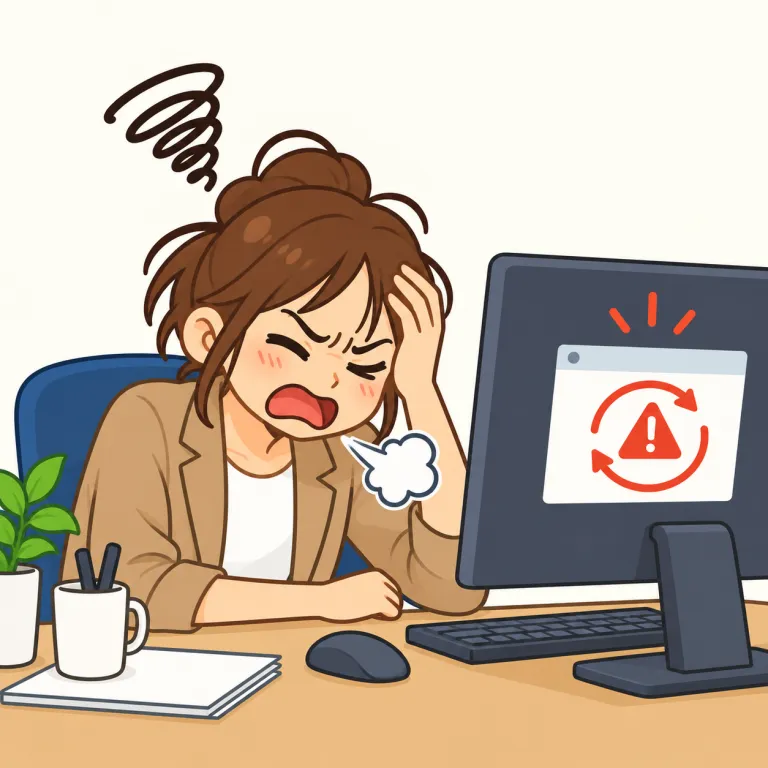
憤慨した
解説 Definition
exasperated は exasperate(ひどくいらだたせる)の過去形・過去分詞で、形容詞として「憤慨した、ひどくいらだった」という意味にもなります。単なる軽い不満より、我慢の限界に近い強いいらだちを表します。
Having become extremely annoyed or frustrated, especially because a problem, mistake, or interruption has continued or happened repeatedly. It can also be the past tense or past participle of exasperate.
覚え方のコツ Memory Tip
原形 exasperate の語末 e を取って -ed を付けた過去形・過去分詞で、語末は /tɪd/ と一音節増えます。形容詞では look、sound、become exasperated とよく結びつきます。annoyed より強く、同じ失敗や妨害が重なって「もう我慢できない」という場面を思い浮かべましょう。
Exasperated is the past and past-participle form of exasperate, made by dropping the final e and adding -ed. Because the base ends in a /t/ sound, the ending is pronounced /ɪd/, adding a syllable. Picture someone facing the same error or interruption again and finally reaching the limit of their patience. Common combinations such as look exasperated, sound exasperated, and become exasperated help distinguish it from mildly annoyed: exasperated signals intense frustration caused by repeated difficulty.
例文
She looked exasperated when the same error appeared again.
同じエラーがまた出たとき、彼女はひどくいらだった様子でした。
The teacher became exasperated after repeated interruptions.
何度も話を遮られて、先生は憤慨しました。
He sounded exasperated because no one had followed the instructions.
誰も指示に従っていなかったので、彼はいらだちを隠せない声でした。
exasperated の類義語・関連語
exasperated の語源・成り立ち Etymology
ラテン語 exasperatus に由来し、ex-「外へ・強く」+ asper「荒い・刺々しい」から成ります。感情をざらつかせて怒らせる感覚が「憤慨した」につながり、関連語に exasperate, asperity があります。
Exasperated comes from exasperate and ultimately from Latin exasperare, “to make rough” or “to irritate.” This Latin verb was built from ex-, which could add force, and asper, meaning “rough” or “harsh.” The physical idea of making something rough developed into the emotional sense of making a person intensely irritated. English forms the past tense and participle by replacing final e with -ed.
同じレベルの語彙をもっと
外部辞書で調べる
この英単語をクイズで覚えよう