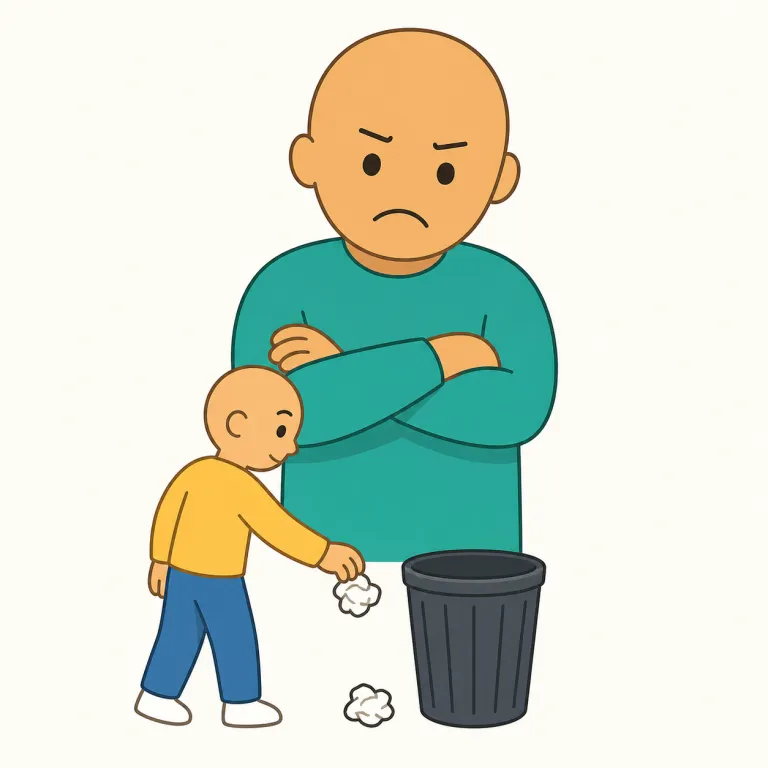
frown upon
frown upon は英検準1級レベルの英熟語で、「を好ましく思わない」という意味があります。発音記号は /fraʊn əˈpɑːn/ です。
を好ましく思わない
解説 Definition
frown upon は、ある行為や習慣をよくないものとして好ましく思わず、否定的に見ることを表す句動詞です。個人の感情だけでなく、学校・会社・家庭・社会などが「容認しない」「歓迎しない」という態度を示すときによく使われます。
To frown upon something means to disapprove of it or think it is not acceptable. It is often used for behavior, habits, or choices that society, parents, teachers, or organizations do not support. The phrase shows a negative opinion, but it is usually less direct than strongly banning something.
覚え方のコツ Memory Tip
frown をまず「眉をひそめる顔」として固定すると覚えやすいです。upon が付くと、そのしかめ面が特定の行為や習慣に向けられる感じになり、「それをよくないものとして見る」へ自然につながります。人そのものを嫌うというより、行為を容認しない時に使うのがコツです。schools frown upon cheating、society frowns upon smoking のように、規則・常識・マナー違反と相性がよく、look down on よりは「軽蔑」ではなく「不賛成・非容認」に重心があります。
Picture a frown first: eyebrows go down when you do not approve. With `upon`, that disapproving face is directed at an action or habit. It often fits rules and social standards, like `schools frown upon cheating`, and is softer than `look down on`.
例文
Skipping meals is frowned upon in his family.
彼の家族では、食事を抜くことは好ましく思われていない。
The school frowns upon cheating on exams.
その学校は、試験でのカンニングを好ましく思っていない。
Many companies frown upon using social media during work hours.
多くの会社では、勤務時間中にSNSを使うことは好ましく思われていない。
frown upon の類義語・関連語
frown upon の語源・成り立ち Etymology
frownは古フランス語froignier(顔をしかめる)に由来し、ケルト語系の語根*frogna(鼻)と関連する。眉間に皺を寄せる動作から不快・不賛成の意味が生まれた。uponを伴い「~を快く思わない」という比喩的表現に発展。関連語:frowny(しかめっ面の)。
"Frown" came into English through Old French, from a verb meaning "to wrinkle the face" or "scowl," and it may be related to an old Celtic root linked with the nose or face. The idea began with the physical act of making an unhappy face. With "upon," it developed into a figurative expression meaning to look on something with dislike or disapproval.
同じレベルの語彙をもっと
英検準1級の一覧へ →外部辞書で調べる
この英熟語をクイズで覚えよう