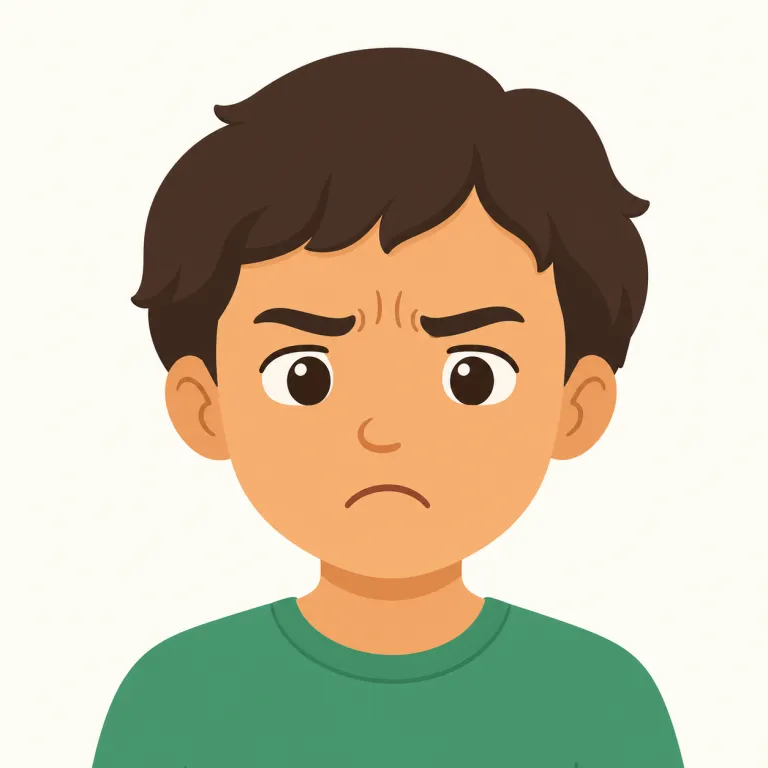
frown
frown は英検2級レベルの英単語で、「眉をひそめる、しかめ面」という意味があります。発音記号は /fraʊn/ です。
意味一覧 (2件)
眉をひそめる
解説 Definition
眉をひそめたり口元をしかめたりして、不満・怒り・不同意などを顔に表す動作です。表情によって否定的な感情や困惑を伝える際に使われます。
To frown means to make your eyebrows move down and together because you are worried, unhappy, or thinking seriously. It is commonly used for facial expressions that show emotion or disapproval. It can describe both a quick reaction and a longer expression.
覚え方のコツ Memory Tip
まず smile の反対側に置くと覚えやすい語です。嬉しいと smile、困る・不満・不同意だと frown。特に眉と口角が下がる「軽いしかめ面」を指し、怒りが強い scowl ほど険しくはありません。会話では frown at a mistake のように何かに顔をしかめる場面や、frown on such behavior のように「好ましくないと見る」意味でも頻出です。表情の基本語として押さえると定着します。
Learn `frown` as the opposite of `smile`. A smile lifts the face; a frown pulls the eyebrows and mouth down. It is also common in patterns like `frown at` and `frown on`, so connect it with both a face and disapproval.
例文
She frowned when she heard the bad news.
彼女は悪いニュースを聞いて眉をひそめた。
He frowned at the bitter taste of the medicine.
彼は薬の苦さに眉をひそめた。
The teacher frowned when the student handed in homework late.
生徒が宿題を遅れて提出すると、先生は眉をひそめた。
えいたんごクイズでの正答率
この語をはじめて出題された 31人 のうち 18人 が正解しました(58%)。
えいたんごクイズの回答から集計した独自データです。1人につき最初に出題されたときの1回だけを数えており、復習や2回目以降の回答、「わからない」と時間切れは含みません。 集計時点は 2026年9月19日 です。
しかめ面
(意味 2)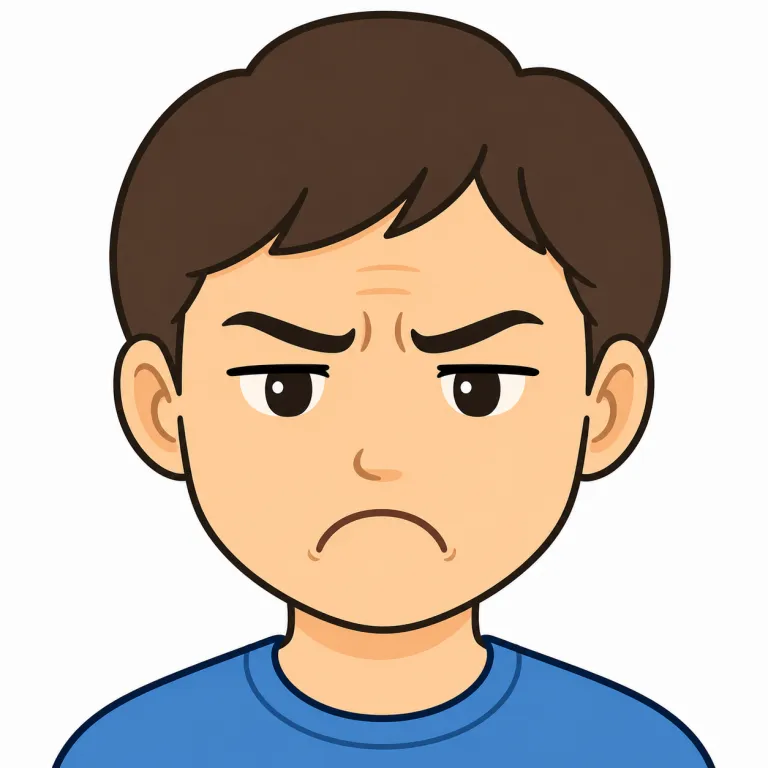
解説 Definition
frown は名詞で、怒り・不満・心配などが表情に表れた「しかめ面」を指します。顔つきそのものや、一瞬浮かんだ険しい表情を述べるときによく使われます。相手が納得していない、困っているといった気持ちをにじませる言い方です。
A facial expression with a furrowed or lowered brow, sometimes accompanied by downturned corners of the mouth, showing anger, worry, displeasure, or disagreement. It can describe either a person's general look or a brief expression that appears on the face.
例文
A deep frown appeared on his face when he read the message.
彼がそのメッセージを読むと、険しい表情が顔に浮かんだ。
Her frown told me that she did not agree with the plan.
彼女のしかめ面で、その計画に賛成していないと分かった。
The child looked up at his mother's frown and became quiet.
その子は母親がしかめ面をしているのを見て、おとなしくなった。
frown の類義語・関連語
類義語
対義語
frown の語源・成り立ち Etymology
frown は中英語 frounen を経て、古フランス語 frognier『鼻を鳴らす・しかめ面をする』に由来し、さらにケルト系の『鼻・鼻孔』を表す語と結びつきます。関連語はフランス語 refrogner、ウェールズ語 ffroen。鼻をしかめる動作から、『眉をひそめる』意味へ発展しました。
"Frown" came into English through Middle English from Old French frognier, meaning to wrinkle the nose or make a grim face. It is linked to Celtic words for the nose or nostril, such as Welsh ffroen. The sense seems to have moved from nose-wrinkling to the broader idea of drawing the brows together.
同じレベルの語彙をもっと
英検2級の一覧へ →外部辞書で調べる
この英単語をクイズで覚えよう