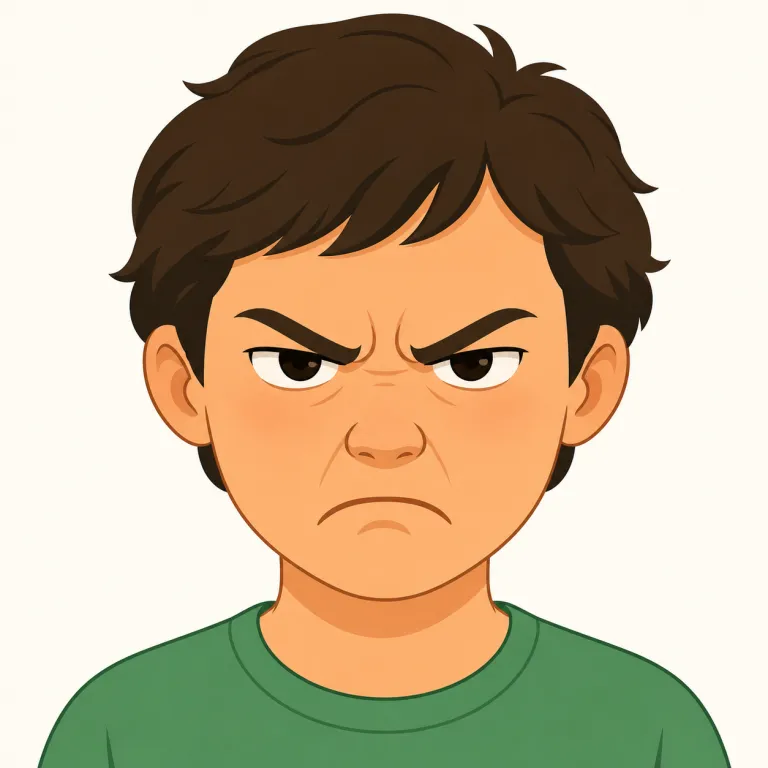
scowl
scowl は英検1級レベルの英単語で、「しかめ面」という意味があります。発音記号は /skaʊl/ です。
しかめ面
解説 Definition
しかめ面とは、怒りや不満、困惑などの感情を表すため、眉をひそめたり唇を曲げたりした顔つきのことである。一般的に否定的な感情や不快感を示す表情である。
A scowl is an angry or unfriendly expression in which someone pulls their eyebrows together and looks upset. It is usually seen on a person's face when they are annoyed, disapproving, or thinking hard. The word refers to the expression itself, not the feeling.
覚え方のコツ Memory Tip
まず frown を知っているなら、それを一段強くした顔が scowl。frown は「眉をひそめる」程度でも使えるが、scowl は怒り・不満・反感が表情全体に出た『険しいしかめ面』の感じが強い。glare が鋭い視線そのものに寄りやすいのに対し、scowl は眉・目・口元までゆがんだ顔つきを思い浮かべると残りやすい。with a scowl, scowl at someone が頻出。名詞でも動詞でも使える点もセットで覚える。
Think of `scowl` as stronger than `frown`. A `frown` can be mild, but a `scowl` shows clear anger or dislike in the whole face. It often appears in `with a scowl` or `scowl at someone`. Remember the dark, hard expression, not just the eyebrows.
例文
He gave a scowl when he heard the bad news.
悪いニュースを聞いたとき、彼はしかめ面をした。
The customer's scowl showed his dissatisfaction with the service.
顧客のしかめ面はサービスへの不満を示していた。
Her scowl deepened as she read the email.
メールを読むにつれて、彼女の表情はさらに険しくなった。
scowl の類義語・関連語
類義語
対義語
scowl の語源・成り立ち Etymology
scowl は中英語 scoulen「しかめる」に由来し、北欧語系から来たと考えられます。さらに古英語 sceolh「ゆがんだ、横目の」に近い語群とされ、関連語に scheel、squint が挙げられます。眉や視線が“曲がる・ゆがむ”感じから「しかめ面」になったと考えると納得しやすいです。
Scowl comes from Middle English scoulen, meaning "to frown," and it is probably from a Scandinavian source. It is also connected with older Germanic words for being crooked, slanting, or looking sideways, like squint. From that idea of a twisted or bent expression, it developed into the modern sense of a dark, angry look.
同じレベルの語彙をもっと
英検1級の一覧へ →外部辞書で調べる
この英単語をクイズで覚えよう