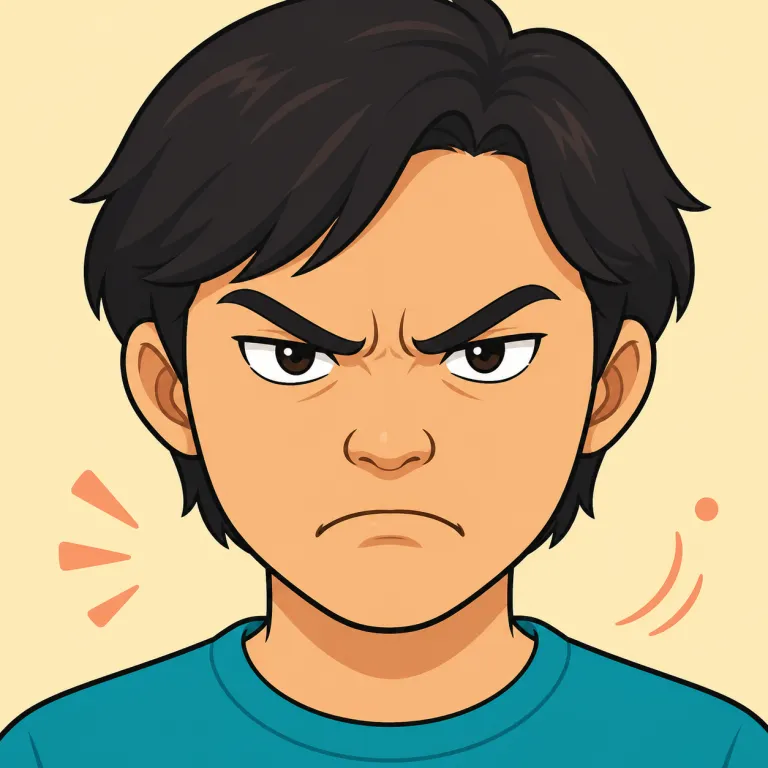
しかめ面の、険しい顔つきの
解説 Definition
怒りや不満、警戒心などから眉をひそめ、相手をにらむような険しい表情をしている状態を表す形容詞。人の顔つきや視線、態度が不機嫌で近寄りがたいことを描写するときに使われ、文学作品や日常描写でもよく見られる。
Scowling describes a face that looks angry, displeased, or unfriendly, often with the eyebrows pulled down. It is used for a person's expression rather than their general personality. The word suggests a clearly visible bad mood.
覚え方のコツ Memory Tip
まず語幹の scowl をひとかたまりで覚えるとよいです。-ing が付いた scowling は「今まさにそんな顔をしている」という形容詞的な見え方になり、a scowling face / a scowling look の形でよく出ます。angry が感情そのものを言うのに対し、scowling は眉を寄せてにらむ“表情の出方”に焦点があります。smiling の反対側にある顔、と置くと定着しやすく、silent disapproval や irritation が顔に出ている場面と結びつけると忘れにくい語です。
Learn `scowl` first as one chunk, then add `-ing`. `Scowling` often appears in phrases like `a scowling face` or `a scowling look`, so picture the expression, not just the feeling. It is closer to the opposite of `smiling` than to the general word `angry`.
例文
The scowling man waited outside the office.
しかめ面の男は事務所の外で待っていた。
She gave me a scowling look when I interrupted her.
私が話をさえぎると、彼女は険しい表情で私を見た。
The child was frightened by the scowling guard.
その子どもはしかめ面の警備員を見て怖がった。
scowling の類義語・関連語
類義語
派生語
scowling の語源・成り立ち Etymology
scowling は scowl に -ing が付いた形で、scowl は古ノルド語系 skule にさかのぼり、「にらむ・顔を曇らせる」感覚を含みます。眉や視線がゆがむイメージから「顔をしかめる」になったと考えると覚えやすい語です。関連語は scowl, scowled。
Scowling comes from scowl + -ing. Scowl is probably from a Scandinavian source, related to Old Norse forms meaning "to frown" or "look gloomily." The idea is of bending the brows or face into a dark, angry look; related English forms include scowl and scowled.
同じレベルの語彙をもっと
外部辞書で調べる
この英単語をクイズで覚えよう