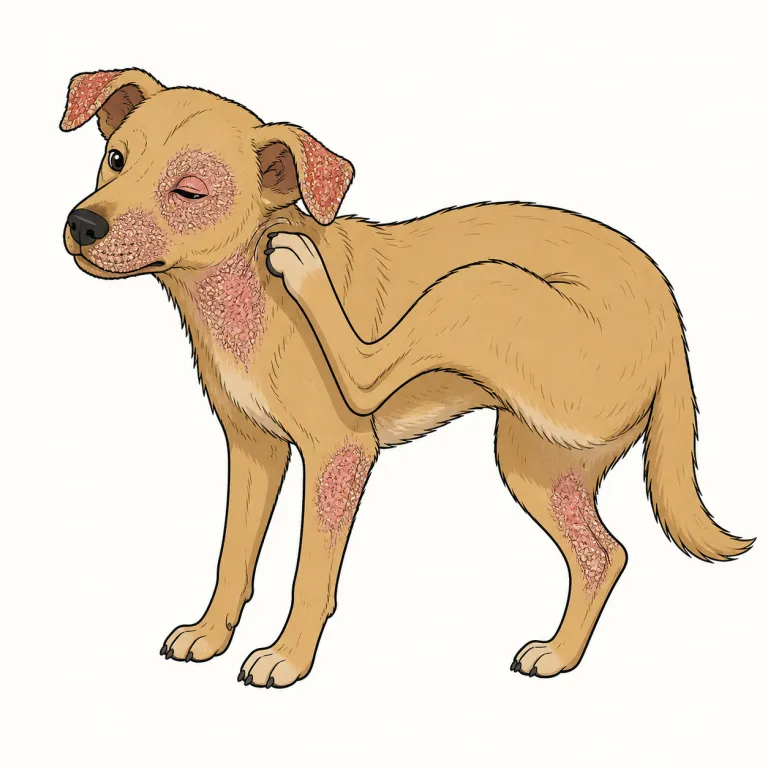
疥癬
解説 Definition
動物の皮膚病で、疥癬虫によって引き起こされる。皮膚に激しいかゆみと発疹を伴う感染症。
Mange is a skin disease that affects animals and is caused by very small insects called mites. It usually causes itching, hair loss, and damaged skin. The word is mainly used in veterinary or animal-care contexts.
覚え方のコツ Memory Tip
mange は、形容詞 mangy「疥癬にかかった・毛並みが悪い」とセットで覚えると残りやすい語です。英語では dog with mange, foxes suffering from mange のように、犬やキツネなど動物の皮膚病として出ることが多く、人の scabies に近いが、まず「動物で言うなら mange」と場面で結びつけるのが近道です。manage とつづり・音が少し似ますが無関係なので混同注意。毛が抜ける、皮膚が荒れる、強いかゆみ、という獣医・保護動物の文脈ごと一枚のイメージで覚えると定着します。
Learn it together with mangy, which describes an animal affected by mange. That pairing makes the word easier to keep in memory. It often appears with animals like dogs or foxes, so link it to an animal-care or vet context, not to human skin words.
例文
The dog suffered from mange, causing severe itching and hair loss.
その犬は疥癬にかかり、激しいかゆみと脱毛に苦しんでいた。
Mange is highly contagious among animals in close quarters.
疥癬は、狭い場所で一緒に暮らす動物の間では非常に感染しやすい。
The veterinarian prescribed medication to treat the cat's mange.
その獣医は、猫の疥癬を治療するための薬を処方した。
mange の類義語・関連語
類義語
派生語
mange の語源・成り立ち Etymology
mange は古フランス語 mange「かゆみ・疥癬」からで、さらに俗ラテン語 manducare「かむ、食べる」にさかのぼる。mandible や manger と同根で、皮膚を虫やかゆみが「食う」感覚から病名になったと分かる。
Mange came into English from Old French mange, meaning an itching skin disease. It goes back to Vulgar Latin manducare, "to chew" or "eat," suggesting the feeling that the skin is being eaten away by itching or parasites. Related English words from the same root include manger and mandible.
同じレベルの語彙をもっと
外部辞書で調べる
この英単語をクイズで覚えよう