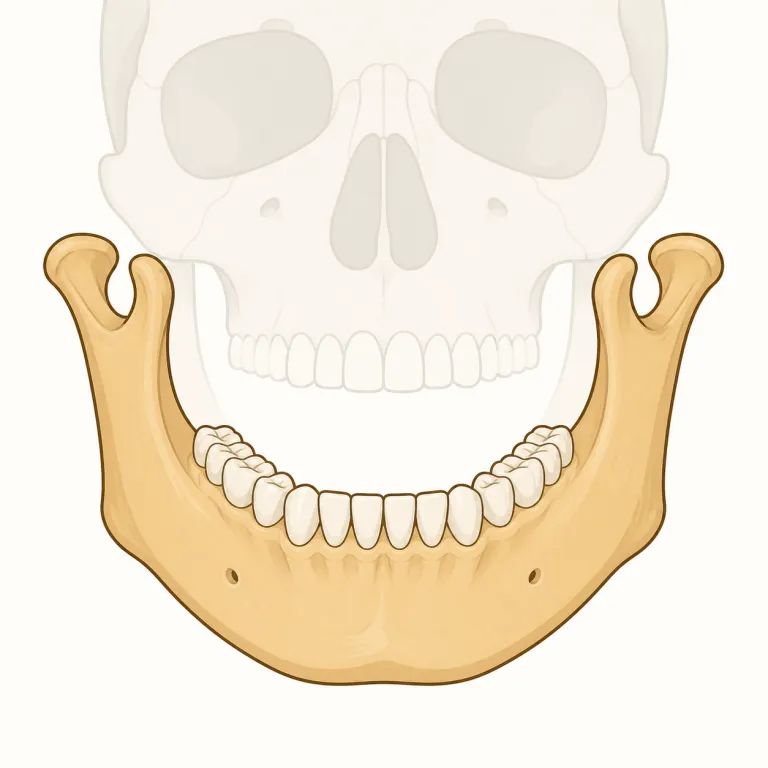
大顎、あご状の口器
noun 名詞昆虫や甲殻類などの節足動物で、口の両側にある一対の硬い摂食器官を指します。餌をかみ砕く、切る、つかむといった働きをし、脊椎動物の下顎骨とは構造が異なります。生物学の文脈で用いられます。
人間や動物の下あごの骨のこと。歯が植わっている下の顎の骨で、咀嚼などに重要な役割を果たす解剖学的な部位である。
The mandible is the lower jawbone in humans and many animals. In biology, the word can also refer to a jawlike mouthpart in insects and some other creatures.
まず日常語の jaw を土台にし、mandible はその解剖学・歯科版の専門語だと置くと覚えやすいです。しかも jaw 全体ではなく lower jaw、つまり「下あごの骨」に限定されるのが重要。mandibular は「下あごの」という関連語なのでセットで覚えると定着します。文脈は fracture of the mandible, move the mandible, dentist/anatomy などが典型。maxilla(上あご)と対で整理すると混同しにくく、edible のような見た目の似た語とは無関係だと切っておくと安全です。
Use the everyday word `jaw` as your base. `Mandible` is the more technical word, especially in anatomy or dentistry, and it means the lower jaw bone. It is helpful to learn it with `maxilla`, the upper jaw, so the pair stays clear in your memory.
The dentist examined the patient's mandible for signs of injury.
歯科医は患者の下顎骨にけがの兆候がないか調べました。
The mandible is a crucial bone for chewing and speaking.
下顎骨は、咀嚼と発話に重要な骨です。
The fracture in his mandible required surgical repair.
彼の下顎骨の骨折は、手術による修復が必要でした。
文脈によって、次の意味でも使われます。
昆虫や甲殻類などの節足動物で、口の両側にある一対の硬い摂食器官を指します。餌をかみ砕く、切る、つかむといった働きをし、脊椎動物の下顎骨とは構造が異なります。生物学の文脈で用いられます。
ラテン語 mandere(かむ)に由来し、mandibula は「かむための部分」を表した。mand-(かむ)を核に見ると働きが見えやすく、manducate や mandibular にも「口でかむ」という感覚が通っている。
Mandible comes from Latin mandere, meaning "to chew." A related Latin form, mandibula, meant the part used for chewing. The word kept that basic sense as it came into English, and it shares its root with words such as mandibular and the rarer manducate.
この英単語をクイズで覚えよう