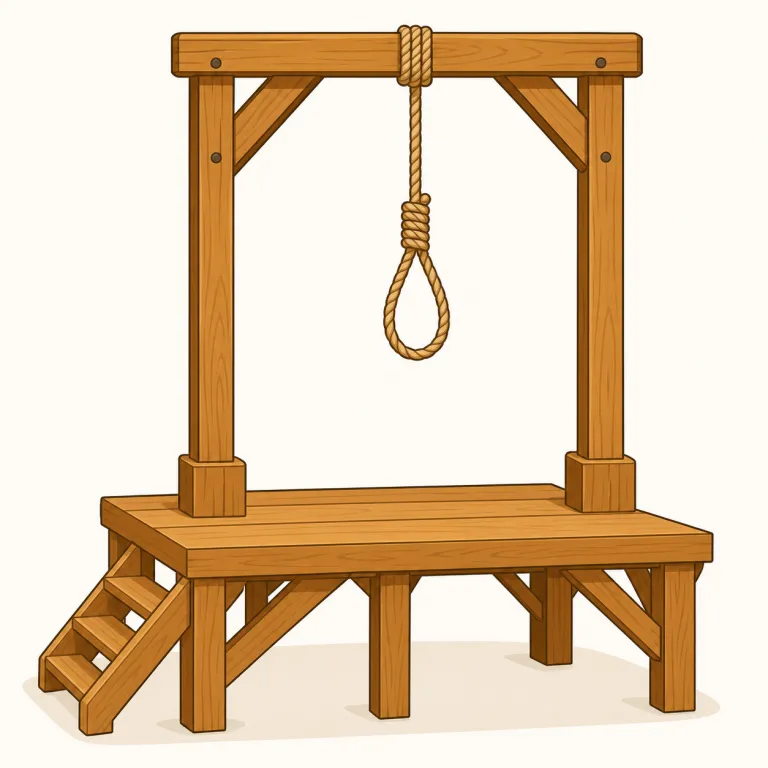
絞首台
解説 Definition
昔、死刑囚を処刑するために建てられた木製の支柱や梁。首を絞める仕組みで死刑を執行していた器具で、刑罰として使われた歴史的な設備。時代劇や歴史書でその名が知られており、罪人の末路を象徴するものでもある。
Gallows are a wooden structure used in the past for hanging criminals as a form of execution. The word is often found in historical, legal, or literary contexts. It usually refers to an official place of death punishment rather than an ordinary structure.
覚え方のコツ Memory Tip
gallows はまず hang / hanged の場面とセットで覚えると定着しやすい語です。歴史・裁判・死刑の文脈でよく出て、go to the gallows, be sent to the gallows のように「絞首刑に向かう」重い響きで使われます。絵としては、木の柱に横木が渡り、縄が下がっている構図を固定すると忘れにくいです。scaffold も処刑台を指すことがありますが、gallows は特に「吊るすための装置」に焦点がある語。語尾が -s でも一つの装置名として出る点も注意です。
Remember this word with `hang` and old punishment scenes. A `gallows` is the structure used for hanging, so phrases like `go to the gallows` are common in historical writing. Even though it ends in `-s`, it usually names one structure.
例文
The gallows stood as a grim reminder of historical punishment.
絞首台は歴史上の刑罰を思い起こさせる陰鬱な存在だった。
Many criminals met their end at the gallows.
多くの犯罪者は絞首台で最後を迎えた。
The old gallows had a heavy wooden beam and a rope.
その古い絞首台には重い木の梁と縄があった。
gallows の類義語・関連語
gallows の語源・成り立ち Etymology
gallowsは古英語gealga「棒、十字架、絞首台」に由来し、ゲルマン祖語galgoへつながります。もとは木の棒や吊るす枠組みを指した語で、そこから罪人を吊るす装置そのものを意味するようになりました。関連語にドイツ語Galgen、古ノルド語galgiがあります。
Gallows comes from Old English gealga, from an older Germanic root meaning a pole, cross, or frame for hanging something. At first it referred more generally to a wooden structure or forked pole. Later, the meaning narrowed to the frame used for execution by hanging. Related forms appear in German Galgen and Old Norse galgi.
同じレベルの語彙をもっと
外部辞書で調べる
この英単語をクイズで覚えよう