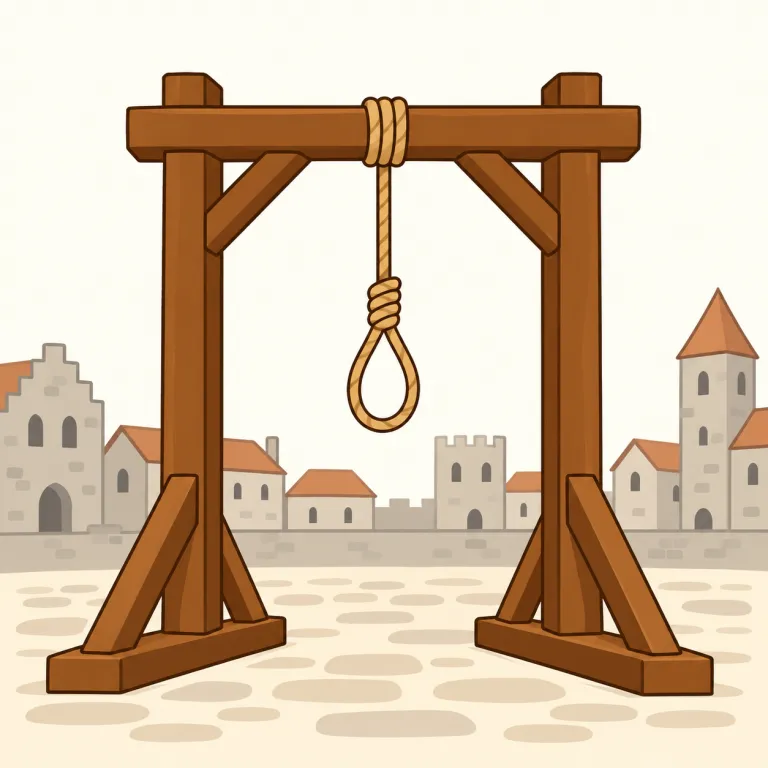
絞首台
解説 Definition
絞首台または死刑囚を吊るして晒すために使用される木製の構造物です。中世ヨーロッパでは司法権の象徴として機能していました。
A gibbet is a structure used in the past for hanging criminals or for showing a dead body in public as a warning. It is a historical word and is usually used when talking about punishment in earlier times.
覚え方のコツ Memory Tip
gibbet は日常語というより、中世史・処刑・ダークファンタジーの文脈で覚えると残りやすい語。まず一般的な gallows(絞首台)を基準にし、gibbet は「吊るす」だけでなく「死体をさらして見せしめにする木の構造物」という、より陰惨で歴史色の強い語だと区別するとよい。hang from a gibbet, be left on the gibbet のような場面と一緒に覚えると、単なる処刑器具でなく“晒し台を兼ねる絞首台”という輪郭で定着する。
Think of `gibbet` as a darker, more historical cousin of `gallows`. It often appears in stories about medieval punishment, where a body is left hanging for everyone to see. Remember the image: `hang from a gibbet` is harsher than a normal execution scene.
例文
The medieval town square had a gibbet where criminals were executed.
中世の町の広場には、犯罪者が処刑される絞首台がありました。
The gibbet served as a public warning to potential lawbreakers.
絞首台は、法を犯そうとする者への公の警告として機能していました。
Bodies hung from the gibbet as a grim display of justice.
死体は、司法の冷酷な見せしめとして絞首台から吊るされていました。
gibbet の類義語・関連語
gibbet の語源・成り立ち Etymology
gibbet は古フランス語 gibet「絞首台・さらし台」から英語へ入り、さらに「棒・杭」を表す語にさかのぼるとされます。人を棒に掛けて見せしめにする装置という原像が、そのまま「絞首台」の意味になりました。関連語に gibbeting があります。
Gibbet entered English from Old French gibet, meaning a gallows or frame for hanging. It probably goes back to an earlier word meaning a stick, stake, or upright piece of wood. The central image of a person hung on a wooden frame stayed in the word as its meaning became fixed in English.
同じレベルの語彙をもっと
外部辞書で調べる
この英単語をクイズで覚えよう