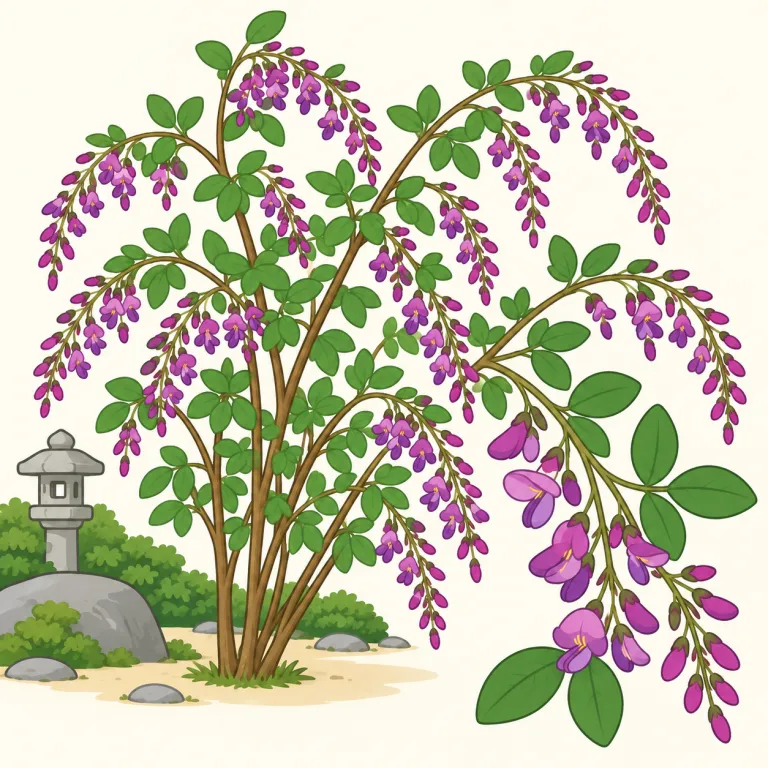
萩
解説 Definition
秋に小さな紫色の花を咲かせるマメ科の多年生植物。日本の秋を象徴する花として重要な文化的意義を持つ。
A Japanese name used in English for bush clover, especially species of Lespedeza that produce small pinkish-purple flowers in autumn. It is culturally associated with autumn and is counted among Japan’s traditional Seven Grasses of Autumn.
覚え方のコツ Memory Tip
hagi は日本語「萩」をそのままローマ字化した植物名で、英語でも日本文化・園芸の文脈で用いられる。紫や紅紫の小花が垂れる秋の庭を思い浮かべ、hagi blossoms、hagi flowers、the Seven Grasses of Autumn という組み合わせで覚える。英語の一般名は bush clover。
Hagi is simply the Japanese plant name 萩 written in the Roman alphabet, so connect it directly with a familiar Japanese autumn scene. Picture arching stems covered with small purple or pink flowers in a garden or classical poem. Useful combinations include hagi flowers, hagi blossoms, and the Seven Grasses of Autumn. In general English, the plant is usually called bush clover, while hagi is especially natural when discussing Japanese gardening, poetry, seasonal imagery, or cultural traditions. This distinction helps you recognize why an otherwise Japanese word appears in an English text.
例文
Hagi flowers bloom in autumn and represent the season in Japanese poetry.
萩の花は秋に咲き、日本の詩では季節を表現している。
The garden was filled with beautiful purple hagi blossoms.
庭は美しい紫色の萩の花でいっぱいだった。
Hagi is one of the Seven Grasses of Autumn in Japanese tradition.
萩は日本の伝統における秋の七草の一つである。
hagi の類義語・関連語
類義語
紛らわしい語
hagi の語源・成り立ち Etymology
日本語の古語「はぎ」に由来し、万葉集にも多く詠まれた秋の七草の一つ。語源は「生え芽(はえぎ)」が縮まったとする説や、歯(葉)が黄変する「葉黄(はぎ)」に由来する説がある。萩の漢字は日本製の国字で、秋の草を表す。
English hagi is a borrowing and romanization of Japanese はぎ, written 萩. The Japanese word is ancient and appears frequently in early poetry, including the Man’yōshū. Several explanations of its deeper origin have been proposed, but none is certain. The character 萩 is a Japanese-created character combining the elements for “grass” and “autumn,” aptly reflecting the plant’s strong seasonal association.
同じレベルの語彙をもっと
外部辞書で調べる
この英単語をクイズで覚えよう