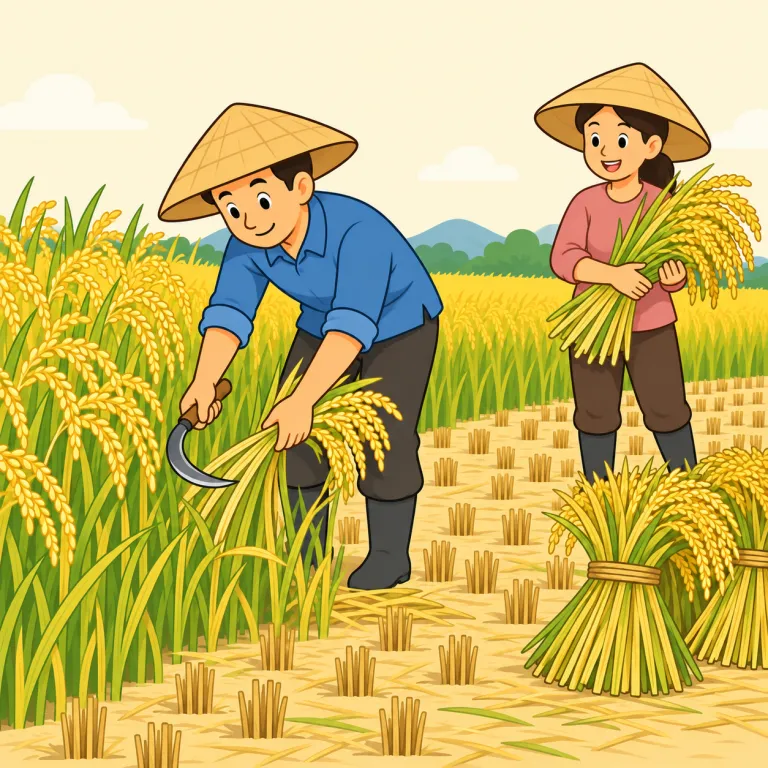
収穫する
解説 Definition
harvesting は harvest(収穫する、収穫)の現在分詞・動名詞です。作物などを畑から集め取っている動作や、「収穫すること」を表します。
The present participle and gerund form of “harvest,” referring either to the ongoing act of gathering ripe crops or to the activity of collecting them from fields, trees, or other growing places.
覚え方のコツ Memory Tip
原形 harvest「収穫する」に -ing を付けた現在分詞・動名詞です。語末の t は重ねず、そのまま harvesting とし、発音では /t/ の後に /ɪŋ/ が続きます。be harvesting crops なら進行中の作業、harvesting apples のように名詞的なら「収穫すること」と場面で覚えます。
Connect harvesting directly to the base verb harvest. No final letter is doubled or removed: simply add -ing, and pronounce the final /t/ of harvest before the added /ɪŋ/. In “farmers are harvesting rice,” it forms the progressive tense and presents the work as ongoing. In “help with harvesting apples,” it functions as a gerund naming the activity. Picture people gathering a crop when it is ready; this keeps the agricultural sense distinct from the broader figurative uses of harvest.
例文
The farmers are harvesting rice today.
農家の人たちは今日、米を収穫しています。
We helped with harvesting apples on the farm.
私たちは農場でリンゴの収穫を手伝いました。
The village begins harvesting wheat in early summer.
その村では初夏に小麦の収穫を始めます。
harvesting の類義語・関連語
harvesting の語源・成り立ち Etymology
harvesting は harvest「収穫する」に動作を表す -ing が付いた形で、harvest は古英語 hærfest「秋・収穫期」にさかのぼります。もとは季節名に近く、秋に作物を取り入れる営みが中心だったため、そのまま「収穫する」の意味になりました。関連語は harvest, German Herbst です。
Harvesting is formed from the verb harvest plus the participial and gerund suffix -ing. Harvest comes from Old English hærfest, which meant “autumn” or the season when crops were gathered. Because the gathering of grain and other produce was the central activity of that season, the seasonal noun developed the senses “crop yield,” “act of gathering crops,” and eventually the verb “to gather a crop.”
同じレベルの語彙をもっと
外部辞書で調べる
この英単語をクイズで覚えよう