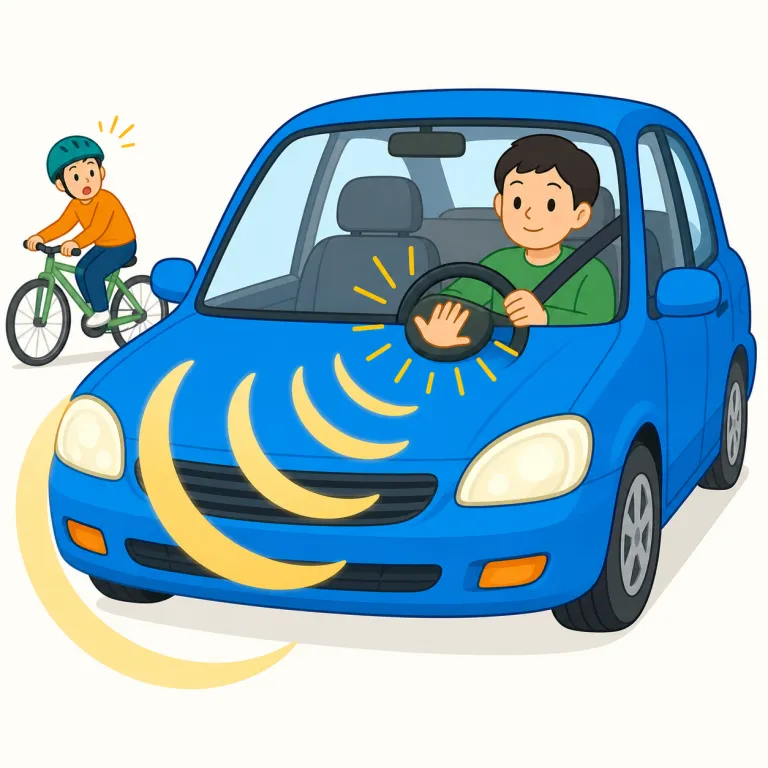
ガーガー鳴く
verb 動詞ガチョウなどが低く大きな声で鳴いていることを表します。鳥を主語にして be honking の形で使うほか、その鳴き声を車の警笛に似た響きとして描写するときにも用います。
車などのクラクションを鳴らしていることを表す動詞です。他の人へ警告や注意を促したり、運転上の意思を示したりする際に使われます。
Honking means making a loud horn sound, especially with a car horn. It is often used when talking about traffic, warning someone, or showing annoyance on the road. The word can also describe the noise itself.
honking は honk「ブーブー、プーッという音を出す」に -ing が付いた形で、「クラクションを鳴らしていること」と覚えると使いやすいです。horn はクラクション本体、honk はその音を出す動作、と切り分けるのがポイント。honk the horn, keep honking, no honking のように、周囲へ警告や不満を伝える目立つ音を出す場面でよく使います。鳥の鳴き声にもありますが、この行では車の警笛音に結びつけて覚えます。
Think of `honk` as the sound a car horn makes, and `honking` as the action in progress. Keep the pair clear: the `horn` is the thing, `honk` is what you do with it. Phrases like `start honking` or `no honking` make it easy to remember.
Drivers were honking their horns on the busy street during rush hour.
ラッシュアワーの混雑した通りで、運転手たちはクラクションを鳴らしていました。
The driver was honking the horn to warn pedestrians of the approaching vehicle.
運転手は車が近づいていることを歩行者に知らせるため、クラクションを鳴らしていました。
A car kept honking outside and disturbing everyone in the neighborhood.
一台の車が外でクラクションを鳴らし続け、近所の人々を困らせていました。
文脈によって、次の意味でも使われます。
ガチョウなどが低く大きな声で鳴いていることを表します。鳥を主語にして be honking の形で使うほか、その鳴き声を車の警笛に似た響きとして描写するときにも用います。
honking は擬音語 honk に、進行・動名詞を作る -ing が付いた語です。honk はガチョウの鼻にかかった鳴き声やラッパのような音をまねた言葉で、その大きく短い音感が車の警笛にも移りました。つまりこの行の「クラクションを鳴らす」は、警告としてプーッと音を出す動作に語源の音まねがそのまま生きています。
Honking comes from honk, an imitative English word based on a sound. It originally copied the nasal sound of geese or horn-like noises, and -ing was later added to make the present participle or verbal noun. The meaning grew naturally from making that sound to sounding a car horn, and it is related to honker.
この英単語をクイズで覚えよう