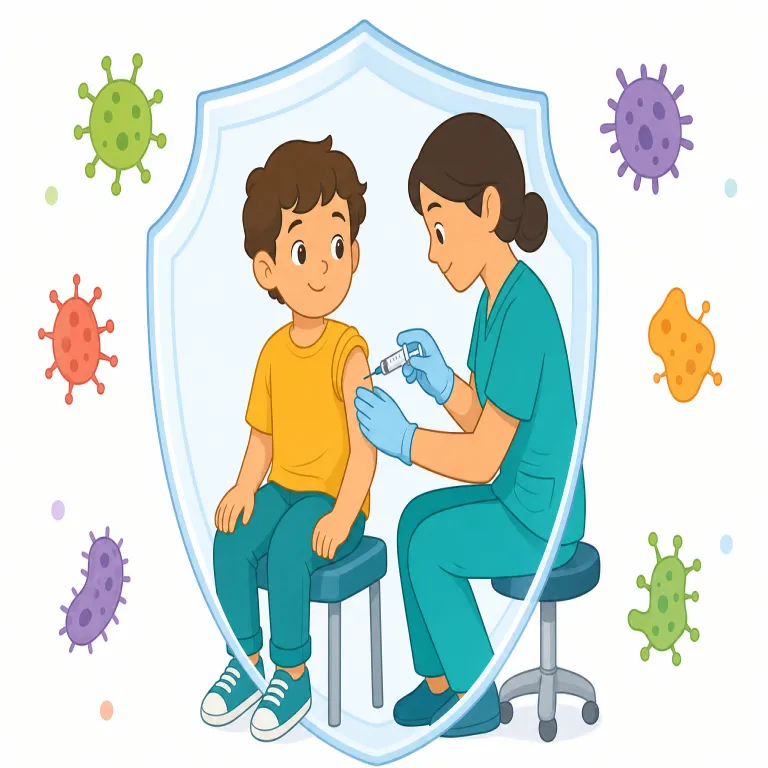
免れさせる、耐性を持たせる
verb 動詞病気以外の害や影響を受けにくくすること。immunize A against B の形で、批判・損失・金利変動などから人や資産を守る意味に使われ、ワクチン接種を表す医学的用法から比喩的に広がった表現である。
ワクチンを投与することで、特定の病気に対する免疫を獲得させる。感染症を防ぐための医学的処置である。予防医学の重要な手段として広く用いられている。
To immunize means to protect a person or animal from a disease, usually by giving a vaccine. It is commonly used in medicine and public health. The word can also be used more broadly for making someone resistant to something harmful.
immune(免疫のある)と immunity(免疫)を知っていれば、immunize は「immune な状態にする」と取れる。-ize は modernize, realize などと同じ「〜化する」の動詞語尾。vaccinate と近いが、vaccinate が「ワクチンを打つ行為」を指しやすいのに対し、immunize は「免疫をつける結果」に寄る。immunize children, immunize against measles の形で、目的語や against 以下とセットで覚えると使い分けしやすい。
Connect it with `immune` and `immunity`. The ending `-ize` means to make something become that way, so `immunize` means to make someone immune. This helps separate it from `vaccinate`, which focuses more on the shot itself.
The clinic will immunize children against measles.
そのクリニックは子どもたちに麻疹の予防接種をする。
Most countries immunize infants within their first year.
ほとんどの国では乳児に生後1年以内に予防接種を行っている。
It's important to be immunized before traveling to remote areas.
辺境地に旅行する前に予防接種を受けておくことが重要である。
文脈によって、次の意味でも使われます。
病気以外の害や影響を受けにくくすること。immunize A against B の形で、批判・損失・金利変動などから人や資産を守る意味に使われ、ワクチン接種を表す医学的用法から比喩的に広がった表現である。
ラテン語 immunis(免除された)が起源。in-(否定)+ munis(義務)で「義務を免れた」が原義。そこから「病気の影響を免れさせる→予防接種する」へ発展した。関連語: immune(免疫の)、immunity(免疫)。
Immunize comes from Latin immunis, meaning "exempt" or "free from a duty." That Latin word is built from in- "not" and a root related to service or obligation. In English, the idea shifted from being free from duties to being protected from disease; related words are immune and immunity.
この英単語をクイズで覚えよう