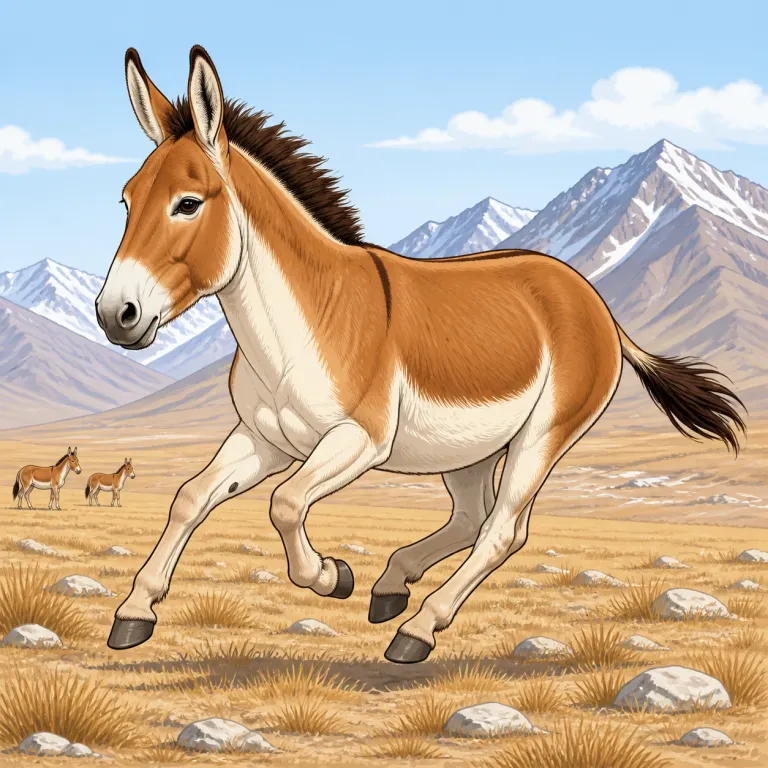
チベットの野生ロバ
解説 Definition
チベット高原と中央アジアに生息する野生のロバの一種で、野生ロバの中で最も大きい種である。厳しい高地環境に適応しており、寒冷な草原地帯で群れをなして生活する。
A kiang is a wild donkey that lives mainly in the Tibetan Plateau region. It is an animal name used in zoology, wildlife writing, and geography. In simple terms, it is a kind of Asian wild ass.
覚え方のコツ Memory Tip
kiang は英語の基本語に分解して覚えるタイプではないので、"Tibetan wild ass" とセットで場面記憶にするのが有効です。donkey より学術的・動物名らしい語で、チベット高原の寒く乾いた草原を群れで走る大型の野生ロバを一枚絵で固定すると残りやすくなります。horse や zebra と同じウマ科・Equus の仲間ですが、kiang はチベットの野生ロバを指す固有名だと押さえると混同しにくいです。
This word is best remembered as a full picture, not by parts: `kiang = Tibetan wild ass`. Imagine a strong wild donkey running across the cold, open Tibetan plateau. That scene helps keep it separate from more familiar animals like `horse`, `donkey`, or `zebra`.
例文
The kiang is the largest wild ass species in the world.
キアンは世界で最も大きな野生ロバの種である。
Kiangs can be found on the Tibetan plateau at high altitudes.
キアンはチベット高原の高地で見ることができる。
The kiang has adapted to survive in harsh mountainous terrain.
キアンは厳しい山岳地形で生き残るために適応している。
kiang の類義語・関連語
類義語
kiang の語源・成り立ち Etymology
kiang はチベット語 kyang「野生のロバ」に由来し、英語ではその土地固有の動物名として借用されました。印欧語のような接辞分解はしにくい語ですが、現地名をそのまま取り入れたため「チベットの野生ロバ」という意味が直感的です。
Kiang was borrowed into English from Tibetan kyang, meaning "wild ass." It is not a word that English breaks into smaller familiar roots. English simply took over the local animal name, keeping its connection to the Tibetan region where the animal is found.
同じレベルの語彙をもっと
外部辞書で調べる
この英単語をクイズで覚えよう