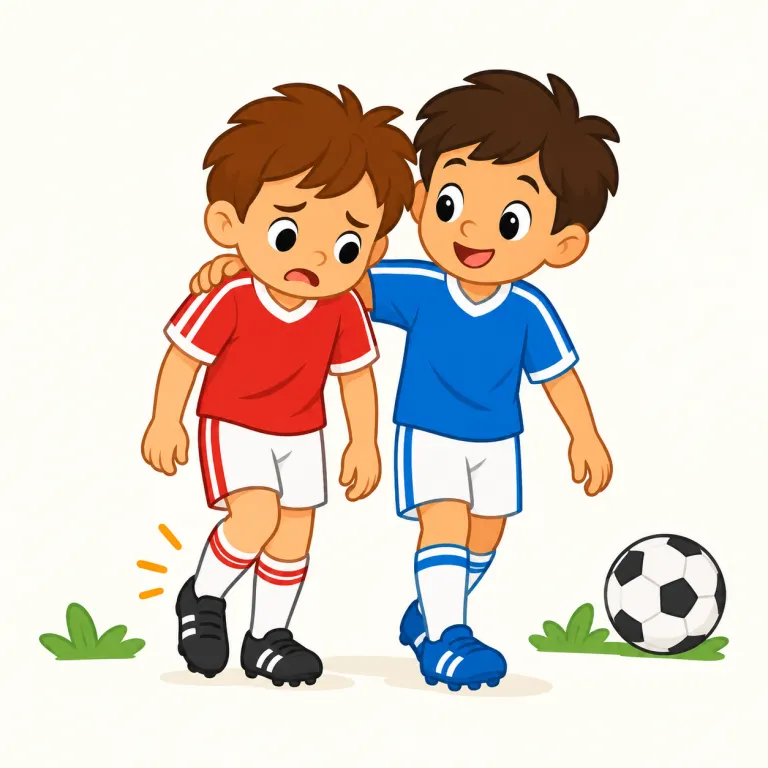
足を引きずっている
解説 Definition
limping は limp(足を引きずる)の現在分詞・動名詞です。けがや痛みなどで普通に歩けず、片足をかばって歩いている状態を表します。
The present participle or gerund of limp, describing walking unevenly or with difficulty, typically because pain, injury, or weakness prevents normal use of one leg or foot.
覚え方のコツ Memory Tip
原形 limp「足を引きずる」に -ing をそのまま付けた現在分詞・動名詞で、短母音の後でも語末子音 p は重ねません。痛む足首をかばい、左右不均等に歩く姿を思い浮かべましょう。be limping after the match「試合後に足を引きずっている」、keep limping「足を引きずり続ける」が典型です。形容詞 limp「ぐったりした」とも区別します。
Form limping by adding -ing directly to limp; do not double the final p. Keep the image of someone protecting an injured ankle and taking uneven steps. Useful patterns include be limping after the match, see a dog limping, and keep limping because of pain. The word describes the action in progress or names that manner of walking. Remember that the verb limp concerns difficult, uneven movement, while the adjective limp means lacking firmness or strength, as in limp fabric. The shared sense is weakness, but the grammatical roles differ.
例文
The player was limping after the match.
その選手は試合後、足を引きずっていました。
I saw a dog limping near the park gate.
公園の門の近くで、足を引きずっている犬を見かけました。
She kept limping because her ankle still hurt.
足首がまだ痛かったので、彼女は足を引きずり続けました。
limping の類義語・関連語
limping の語源・成り立ち Etymology
limping は limp「足を引きずる」に -ing が付いた形で、limp は古英語 lemphealt やゲルマン系の「ぶら下がる・たるむ」感覚の語と結びつけられます。関連語の limp, limpness と同じく、「脚がしゃんと上がらずゆるむように歩く」イメージから今の意味になりました。
Limping is the -ing form of the verb limp. The verb has been used in English for centuries for walking lamely or unevenly, but its earlier origin is uncertain. It has sometimes been connected with older Germanic forms associated with lameness, though the exact historical path is not secure. The modern formation is straightforward: limp plus -ing, with no doubling of p. It can describe an ongoing action or function as a gerund naming that action.
同じレベルの語彙をもっと
外部辞書で調べる
この英単語をクイズで覚えよう