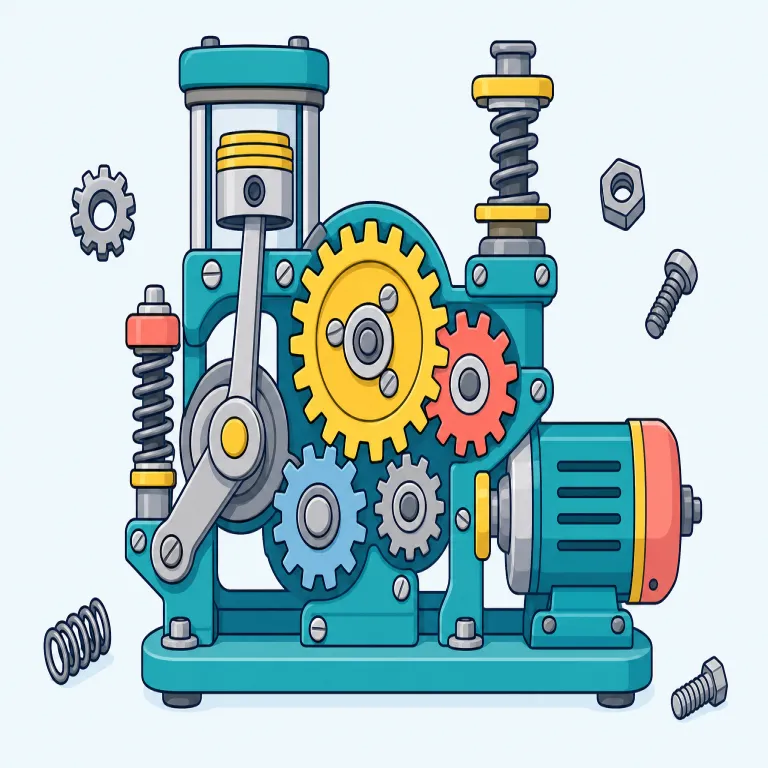
mechanical
mechanical はTOEIC 730・TOEFL 60・IELTS 5.5レベルの英単語で、「機械的な、機械の」という意味があります。発音記号は /məˈkænɪkəl/ です。
意味一覧 (2件)
機械的な
解説 Definition
mechanical は、機械や装置に関するという意味のほか、機械のように決まりきっていて、感情や工夫が感じられない様子も表します。正確さや反復性を強調する場合にも、冷たさや単調さを示す場合にも使われる形容詞です。
Mechanical means related to machines, engines, or physical parts that work together. It can also describe actions that are done automatically, without much thought or feeling. The meaning depends on whether the context is technical or more general.
覚え方のコツ Memory Tip
machine, mechanic, mechanism と同じ mech- 系だとまとめると残りやすい語。接尾辞 -al は「〜に関する」なので、まずは「機械に関する」が基本。mechanical parts, mechanical engineer, mechanical failure のように装置や仕組みの話でよく出る。そこから比喩で「人の動きや反応が機械みたいに型どおり」という意味にも広がる。thoughtful や natural の反対寄りで、a mechanical smile は心のこもらない笑顔。automatic は「自動の」、mechanical は「機械っぽい・無感情」の含みを持ちやすい。
Group it with `machine`, `mechanic`, and `mechanism`. That `mech-` family gives you the idea of machines and systems. So `mechanical` first means related to machinery, as in `mechanical parts` or `mechanical failure`. Then it extends to people and actions that feel machine-like, stiff, or without real feeling, such as `a mechanical smile`.
例文
His smile is mechanical.
彼の笑顔は機械的だ。
She gives a mechanical answer.
彼女は機械的に答える。
He says yes in a mechanical way.
彼は機械的に「はい」と言う。
機械の
(意味 2)解説 Definition
この mechanical は、感情や動きがぎこちないという意味ではなく、実際の機械そのものに関係することや、機械を使って行うことを表す。工学、製造、整備、装置、部品などの説明でよく使われ、電気式や手動と対比されることも多い。
覚え方のコツ Memory Tip
machine, mechanic, mechanism と同じ mech- 系だとまとめると残りやすい語。接尾辞 -al は「〜に関する」なので、まずは「機械に関する」が基本。mechanical parts, mechanical engineer, mechanical failure のように装置や仕組みの話でよく出る。automatic は「自動の」、mechanical は「機械の・機械を使った」という軸で押さえるとよい。
例文
The factory replaced several mechanical parts last week.
その工場は先週、いくつかの機械部品を交換した。
Tom studies mechanical parts at school.
トムは学校で機械部品について学んでいます。
The door uses a mechanical system instead of an electronic one.
そのドアは電子式ではなく機械式の仕組みを使っている。
mechanical の類義語・関連語
mechanical の語源・成り立ち Etymology
ギリシャ語 mēkhanē(機械、仕掛け)→ラテン語 mechanicus → 英語 mechanical。接尾辞 -ical は「〜の性質を持つ」。関連語: mechanism(仕組み)、mechanic(整備士)。「仕掛けで動くような=自動的・無意識的」という比喩的意味にも発展した。
Mechanical comes from Greek mēkhanē, meaning a machine, device, or contrivance, through Latin mechanicus. The ending -ical gives the sense of "having the nature of." At first it described things connected with machines or skilled devices. Later it also developed a figurative sense for actions done automatically, as if by a machine. Related words include mechanism and mechanic.
同じレベルの英単語をもっと
TOEIC 730の一覧へ →外部辞書で調べる
この単語を英単語クイズで覚えよう