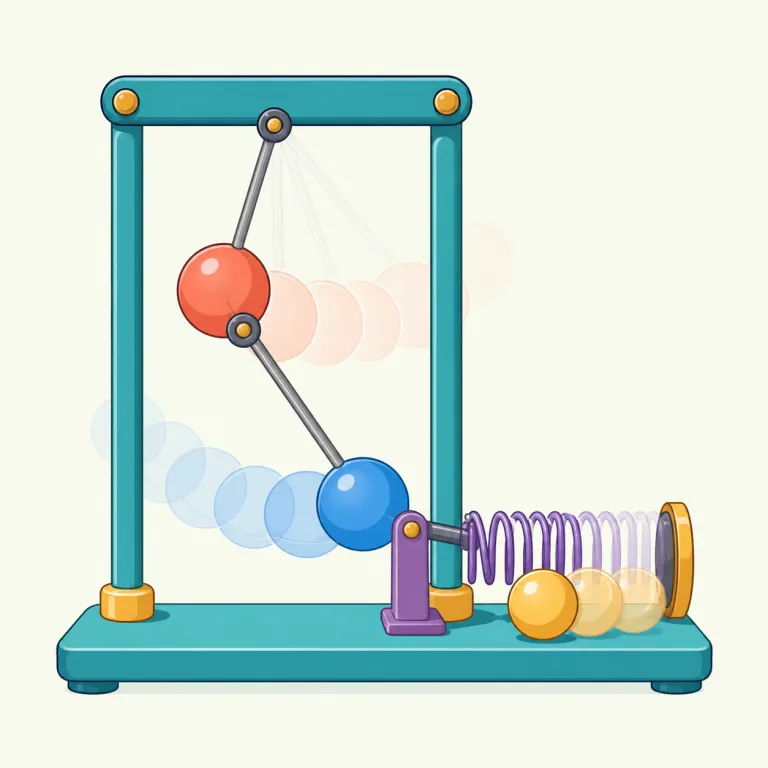
動力学的な
解説 Definition
力学や物の動きに関する科学的な性質を持つ、という意味の形容詞です。静的ではなく、動きや変化を伴う物理的性質を表します。
Dynamical means related to motion, change, or forces that affect how something develops over time. It is mainly used in science, mathematics, and engineering, especially in phrases like "dynamical system." In general English, "dynamic" is more common than "dynamical."
覚え方のコツ Memory Tip
まず dynamic「動きのある・活発な」を土台にすると覚えやすいです。dynamical はその形を少し学術寄りにした語で、日常的な「活発な」ではなく、物理や数学で『動きや時間変化をどう扱うか』に焦点がある形容詞です。static(静的な)と対で押さえると定着しやすく、dynamical system, dynamical behavior のような組み合わせで見ると『変化する対象のふるまいを述べる語』だと判断できます。dynamic とほぼ近いですが、専門文脈では dynamical のほうが出やすい点に注意です。
Start from `dynamic`, which already gives the idea of movement and change. `Dynamical` is the more technical, academic form, often used in physics or mathematics. It is easy to remember by pairing it with `static`: `static` does not change, `dynamical` does. Common combinations like `dynamical system` make the meaning stick.
例文
The dynamical system was studied using complex mathematical models.
その力学系は複雑な数学モデルを使って研究されました。
Engineers analyzed the dynamical properties of the structure.
エンジニアはその構造の動力学的な特性を分析しました。
A dynamical system can reach equilibrium when its state no longer changes over time.
力学系は、時間がたっても状態が変化しなくなると平衡に達することがあります。
dynamical の類義語・関連語
dynamical の語源・成り立ち Etymology
dynamical は dynamic「力のある・動力の」+ -al。dynamic はギリシャ語 dynamis「力・能力」に由来し、ただ動くのでなく「内側の力が運動を生む」ので動力学的という意味になる。dynamo, dynamite も同根。
Dynamical comes from dynamic with the ending -al. Dynamic comes from Greek dynamis, meaning "power" or "capacity." The word kept the idea of inner force or energy producing movement, which is why it became common in scientific language. Related English words include dynamo and dynamite.
同じレベルの語彙をもっと
外部辞書で調べる
この英単語をクイズで覚えよう