運動量・勢い
解説 Definition
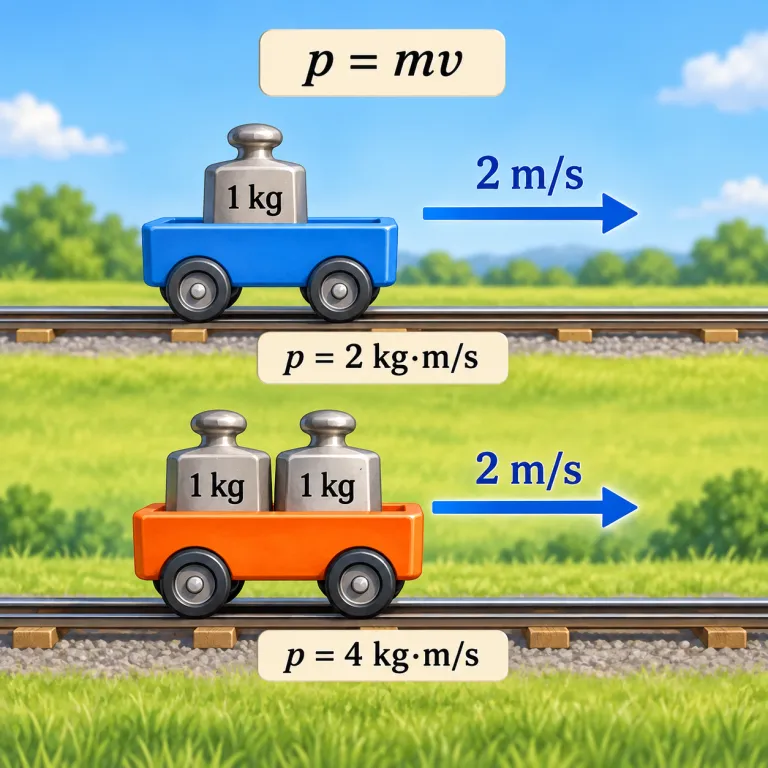
物理学における運動量で、質量と速度の積として定義される。または一般的には何かの勢いや推進力を示す。
"Momenta" is the plural form of "momentum." In physics, it means the quantity of motion that an object has because of its mass and speed. It can also be used in a more general way for different kinds of driving force or strong progress.
覚え方のコツ Memory Tip
まず momentum を確実に押さえると覚えやすい語です。日常英語では momentum が「勢い」、物理では「運動量」。momenta はその複数形で、「複数の物体それぞれの運動量」「いくつもの勢い」と考えると定着します。physics で particles have different momenta のように出やすく、見た目が moments に似ていても別語なので注意。まず単数 momentum、専門文脈では複数 momenta、とセットで覚えるのが近道です。
Start with the singular form: `momentum`. In everyday English it often means energy or progress, and in physics it is a technical term. `Momenta` is just the plural used in scientific writing, so think: one object has momentum, many objects have different momenta. Do not confuse it with `moments`.
例文
The physicist calculated the momenta of colliding particles.
その物理学者は衝突する粒子の運動量を計算した。
The two particles had distinct momenta before the collision.
2つの粒子は衝突前に異なる運動量を持っていた。
Scientists measured the momenta of all particles before and after the collision.
科学者は衝突の前後のすべての粒子の運動量を測定した。
momenta の類義語・関連語
momenta の語源・成り立ち Etymology
momenta は momentum の複数形で、ラテン語 momentum「動き・推進力」に由来し、さらに movere「動かす」にさかのぼります。もとは「動いて生まれる力」という感覚です。そこから物理の運動量や比喩の勢いへ広がり、関連語は motion, moment。
Momenta is the plural of momentum. Momentum comes from Latin momentum, meaning "movement" or "driving force," from movere, "to move." The word first suggested force produced by motion, and later developed both its technical sense in physics and its wider sense of growing force or progress, related to motion and moment.
同じレベルの語彙をもっと
外部辞書で調べる
この英単語をクイズで覚えよう