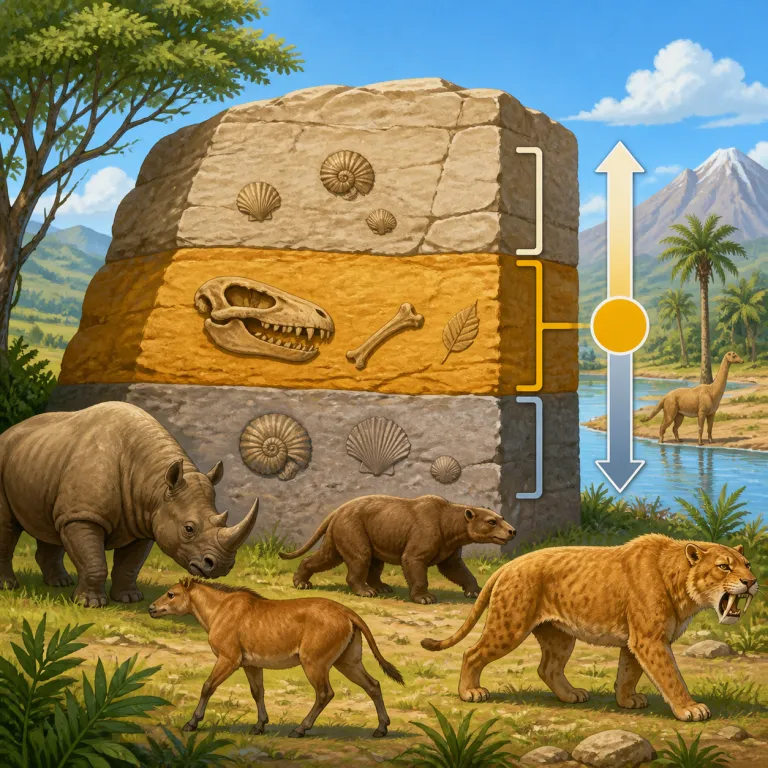
新第三紀
解説 Definition
新生代の地質時代区分の一つで、古第三紀の後、第四紀の前にあたります。およそ2303万年前から258万年前までの時代を指します。
The Neogene is a period in Earth's history studied in geology and paleontology. It comes after the Paleogene and before the Quaternary. This term is mainly used in scientific discussions about ancient climates, rocks, and life.
覚え方のコツ Memory Tip
まず neo- を見たら「new 系」と反応する癖をつける。Neogene は地質時代名なので、細かな年代を先に詰めるより「新生代の中で、Paleogene より後に来る“より新しい側”の区分」と置くと残りやすい。-gene は generate や genesis のような「生じる」語群を連想すると、「新しく現れた時代」というまとまりで覚えられる。Neogene rocks、Neogene period の形でも出るので、時代名+地層名の両方で見慣れておくと混同しにくい。
Let `neo-` remind you of "new," as in `neonatal` or `neoclassical`. Then connect `-gene` with words like `genesis`, which suggest beginning or formation. A simple memory hook is: `Neogene` is the newer one compared with `Paleogene`.
例文
The Neogene period saw the evolution of many mammal species.
新第三紀には多くの哺乳類が進化した。
Fossils from the Neogene era provide insights into ancient life.
新第三紀の化石から、太古の生物について知ることができる。
Geologists study Neogene rock formations worldwide.
地質学者は世界各地の新第三紀の地層を研究している。
neogene の類義語・関連語
neogene の語源・成り立ち Etymology
neogene は近代学術語で、ギリシャ語 neo-「新しい」と -gene「生じた・生まれた」から成る語です。文字どおり「より新しく生じた時代・地層」という発想で新第三紀を指し、neo- をもつ neonatal や同根の genesis も意味のつながりが見えます。
`Neogene` is a modern scientific word built from Greek `neo-` meaning "new" and `-gene`, from a root meaning "born" or "produced." The name was created to suggest something more newly formed. In geology, it became the name of a more recent period of Earth history. Related words with the same roots include `neonatal` and `genesis`.
同じレベルの語彙をもっと
外部辞書で調べる
この英単語をクイズで覚えよう