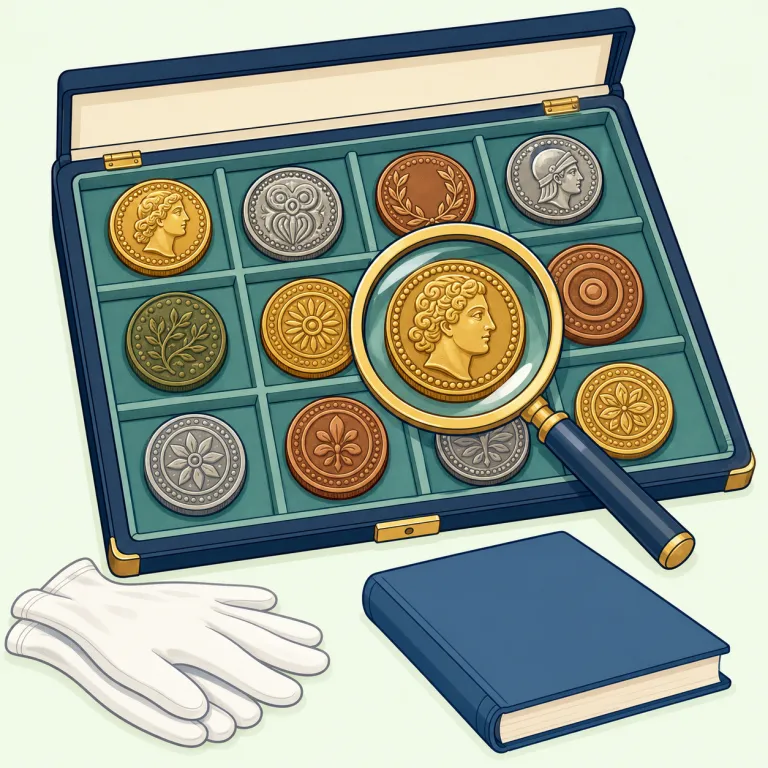
貨幣学的な
解説 Definition
貨幣や硬貨の収集、研究、歴史に関する学問を表現する形容詞。貨幣学に関する知識や活動を指す。
Numismatic means related to coins, paper money, medals, and their study or collection. It is often used in history, museums, and collecting, especially when talking about money from the past.
覚え方のコツ Memory Tip
まず名詞 numismatics(貨幣学)を核にして、-ic / -atic が付いた形容詞が numismatic だと覚えると整理しやすいです。意味は academic が「学問の」、scientific が「科学の」と同じく「貨幣学の・硬貨収集に関する」。coin や currency の一般語より、古銭・記念硬貨・収集研究の文脈で出やすいのが手がかりです。a numismatic collection, numismatic value の形で見ると定着しやすいです。numeric(数の)とつづりも意味もかなり違うので混同注意。
Start from `numismatics`, the study of coins, and then see `numismatic` as its adjective form, like `academic` from `academics`. This word usually appears in coin-collecting or old-currency contexts, not everyday money talk. Remember common pairs like `numismatic collection` or `numismatic value`. Be careful not to mix it up with `numeric`, which is about numbers.
例文
His numismatic collection includes rare coins from many centuries.
彼の貨幣コレクションには、さまざまな時代の珍しい硬貨が含まれている。
Her numismatic expertise helped identify the rare ancient coins.
彼女は貨幣学の専門知識を生かして、珍しい古代硬貨を見分けた。
The museum's numismatic department displays coins from around the world.
博物館の貨幣学部門は、世界中の硬貨を展示している。
numismatic の類義語・関連語
numismatic の語源・成り立ち Etymology
numismatic は numisma「貨幣」に由来する語で、さらに古代ギリシャ語 nomisma「慣習で通用するもの、貨幣」へさかのぼります。numismatics や numismatist と同語根で、硬貨は単なる金属でなく『社会で通用すると認められた物』だと見える語です。
Numismatic comes from Greek nomisma, meaning "coin" or something accepted by custom, through later Latin and French forms. The root shows that a coin was understood not just as metal, but as something society agreed to use as money. Related words include numismatics and numismatist.
同じレベルの英単語をもっと
外部辞書で調べる
この単語を英単語クイズで覚えよう