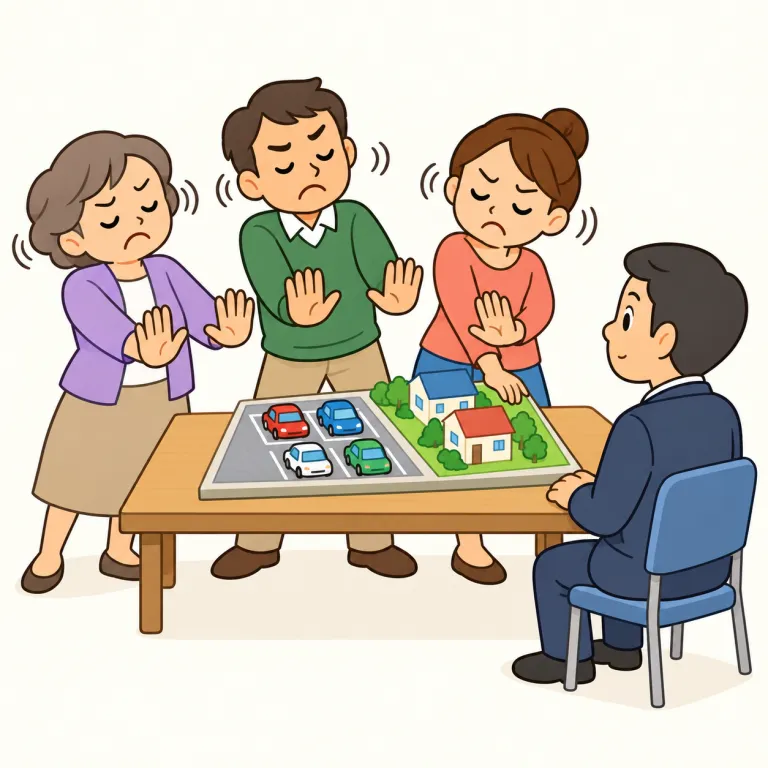
反対している
解説 Definition
objecting は object(反対する、異議を唱える)の現在分詞・動名詞です。提案や意見に対して不賛成であることを表し、to を伴って objecting to ... の形でよく使われます。
The present participle or gerund of object, meaning expressing disagreement with or opposition to an idea, proposal, rule, or action. It is commonly followed by the preposition to.
覚え方のコツ Memory Tip
原形 object に -ing をそのまま付けた現在分詞・動名詞で、動詞では後半を強く発音します。「反対の意見を前に投げ出す」という語形成を手掛かりに、objecting to the plan の形で覚えましょう。to は前置詞なので、後ろには名詞や動名詞が続きます。
Objecting is formed by adding -ing directly to the verb object, with no spelling change. When object is a verb, the stress falls on the second syllable. Connect its parts with the idea of putting an opposing point in someone’s way, then remember the common pattern objecting to a plan, rule, or proposal. Here, to is a preposition, so it can be followed by a noun or an -ing form: objecting to the change or objecting to paying extra.
例文
Several neighbors are objecting to the new parking plan.
数人の近隣住民が新しい駐車計画に反対しています。
She kept objecting because the rule seemed unfair.
その規則が不公平に思えたため、彼女は反対し続けました。
The committee listened to the members objecting to the proposal.
委員会はその提案に反対しているメンバーの意見を聞きました。
objecting の類義語・関連語
objecting の語源・成り立ち Etymology
ラテン語のob(反対に)+iacere(投げる)に由来し、フランス語経由で英語に入りました。接頭辞ob-、語根ject(投げる)、接尾辞-ingから成ります。「主張や障害を前に投げ出す」イメージから「反対する」意味が定着し、同じ語根のreject(退ける)とも語感が共通します。
Object ultimately comes through French and Latin from Latin obicere, formed from ob-, “against,” and iacere, “to throw.” The literal underlying image is of throwing or placing something in the way, which developed into the sense of raising an opposing point. Objecting adds the participial suffix -ing to the English verb object without changing its spelling.
同じレベルの語彙をもっと
外部辞書で調べる
この英単語をクイズで覚えよう