オレンジ色、だいだい色
noun 名詞赤と黄色の間にある、熟したオレンジの皮に似た色を指します。色名としては通常不可算で、bright orange や a shade of orange のように使われ、果物そのものを指す既存語義とは区別されます。
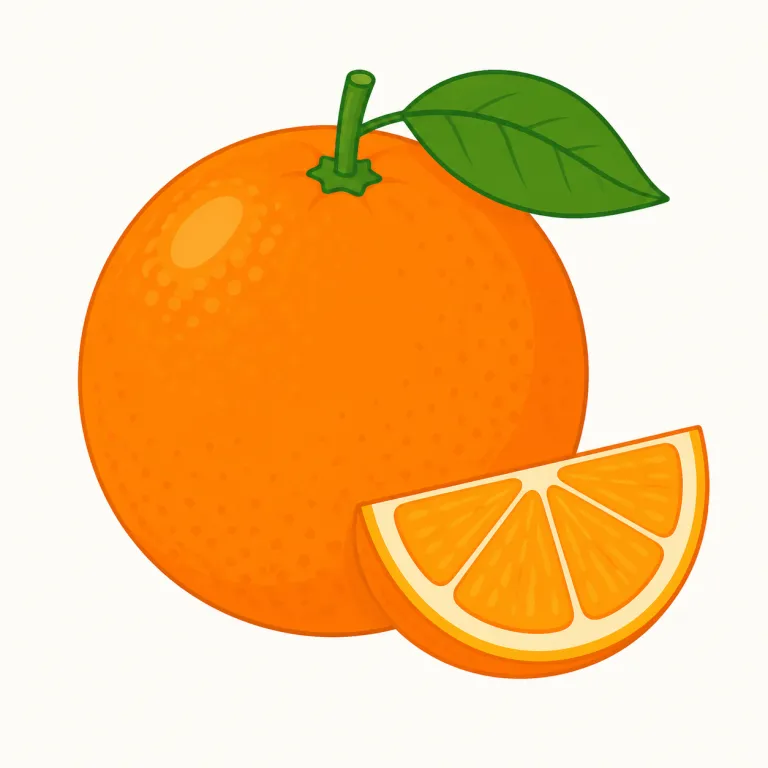
orange は英検6級レベルの英単語で、「オレンジ」という意味があります。発音記号は /ˈɔːrɪndʒ/ です。
オレンジは柑橘系の果物で、鮮やかなオレンジ色の皮を持ちます。甘酸っぱい味わいが特徴で、ビタミンCが豊富に含まれています。世界中で広く食べられており、ジュースとしても人気があります。
An orange is a round citrus fruit with orange-colored skin and sweet or slightly sour juice inside. It is commonly eaten fresh or used for juice. The word usually refers to the fruit when it is used as a noun.
orange はまず『果物』を核に覚えると定着しやすいです。りんごなら apple、バナナなら banana と同じく、店・朝食・ジュースの場面でよく出ます。特に orange juice, orange peel, an orange tree の形で固めると実用的です。さらに英語では fruit 名と色名がそのまま重なり、an orange は果物、orange は色にもなるので、『丸い柑橘を見てそのまま色名にもつながる語』として一体で覚えると忘れにくくなります。
Remember orange first as a fruit word, then notice that the same word is also a color. That double use makes it stick. Useful word pairs like orange juice, orange peel, and orange tree give you clear pictures.
I eat an orange.
私はオレンジを食べます。
This orange is sweet.
このオレンジは甘いです。
An orange is on the table.
オレンジがテーブルの上にあります。
この語をはじめて出題された 37人 のうち 37人 が正解しました(100%)。
えいたんごクイズの回答から集計した独自データです。1人につき最初に出題されたときの1回だけを数えており、復習や2回目以降の回答、「わからない」と時間切れは含みません。 集計時点は 2026年9月19日 です。
文脈によって、次の意味でも使われます。
赤と黄色の間にある、熟したオレンジの皮に似た色を指します。色名としては通常不可算で、bright orange や a shade of orange のように使われ、果物そのものを指す既存語義とは区別されます。
サンスクリット語 naranga が、ペルシャ語・アラビア語 naranj、古フランス語 orenge を経て英語 orange になりました。語頭の n が落ちた歴史を知ると、スペイン語 naranja やアラビア語 naranj とつながり、「果物名が旅しながら形を変えた」と実感できます。
Orange came into English through a long journey: from Sanskrit naranga into Persian and Arabic naranj, then into Old French orenge. Along the way, the first n was lost in some forms, which is why English orange differs from Spanish naranja. The word shows how names for trade goods can change shape as they travel between languages.
この英単語をクイズで覚えよう