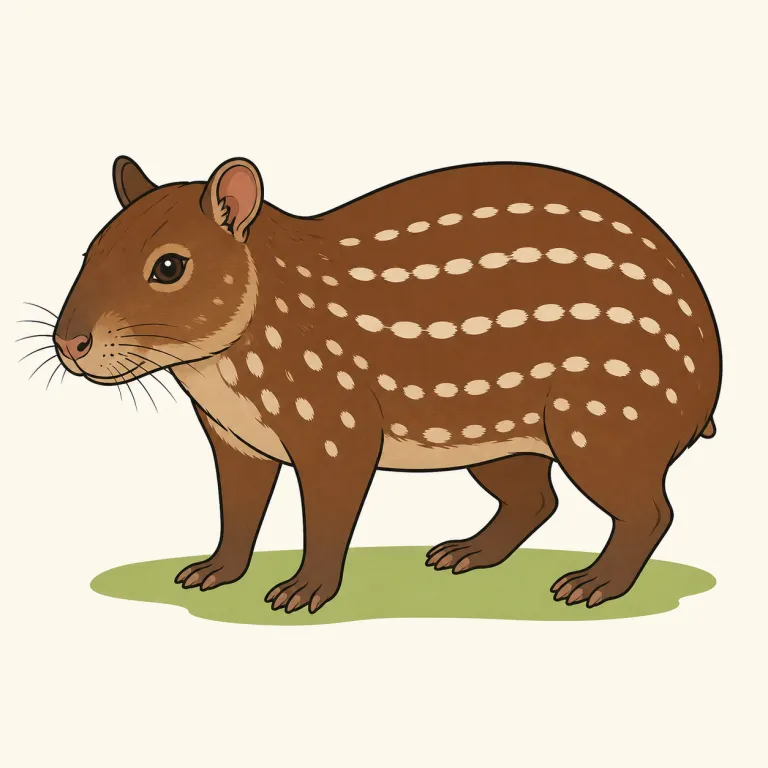
パカ(中南米にすむ大型の齧歯類)
解説 Definition
パカは中南米の森林や川辺近くに生息する、ずんぐりした体つきの大型齧歯類です。夜行性で、果実や植物を食べ、体の側面に白い斑点や縞模様が見られることが多く、地域によっては食用として狩られる動物を指します。
A paca is a large wild rodent from Central and South America. It has a heavy body, short legs, and usually lives in forests near water. The word is mainly used in zoology or when talking about wildlife in that region.
覚え方のコツ Memory Tip
paca は意味を細かく分解するより、「固有の動物名」として覚える語です。まず alpaca と対で置き、「alpaca は毛をとるラクダ科、paca は南米の大型げっ歯類」と対比すると混同しにくくなります。さらに capybara ほど有名ではないが、同じく中南米の野生動物だと並べておくと定着しやすいです。森や川辺で、ずんぐりした体に白い斑点がある夜行性の rodent という一枚絵で覚えると、辞書的説明より残ります。
Treat `paca` as a fixed animal name, not a word to break apart. Learn it next to `alpaca`: alpaca is the wool animal, paca is the wild rodent from Central and South America. It also helps to place it near `capybara` as another famous animal from that region.
例文
The paca is a nocturnal rodent found in Central and South America.
パカは中南米に生息する夜行性の齧歯動物です。
Pacas are hunted for their meat in some regions.
地域によっては、パカは食肉用に狩猟されます。
A paca can weigh up to 15 pounds in the wild.
野生のパカは体重が15ポンドほどになることがあります。
paca の語源・成り立ち Etymology
paca は南米先住民語、特にトゥピ系の語に由来し、それをポルトガル語・スペイン語が取り入れて英語に伝えました。ヨーロッパ語で作られた学術語ではなく、現地でその動物を指した名がそのまま入ったため、「パカ」という固有の呼び名になっています。
Paca came into English through Spanish and Portuguese, but its deeper source is an Indigenous South American language, especially from the Tupi language family. Unlike many scientific animal names, it was not built from Greek or Latin parts. English kept the local animal name, so the word stayed close to its original form.
同じレベルの語彙をもっと
外部辞書で調べる
この英単語をクイズで覚えよう