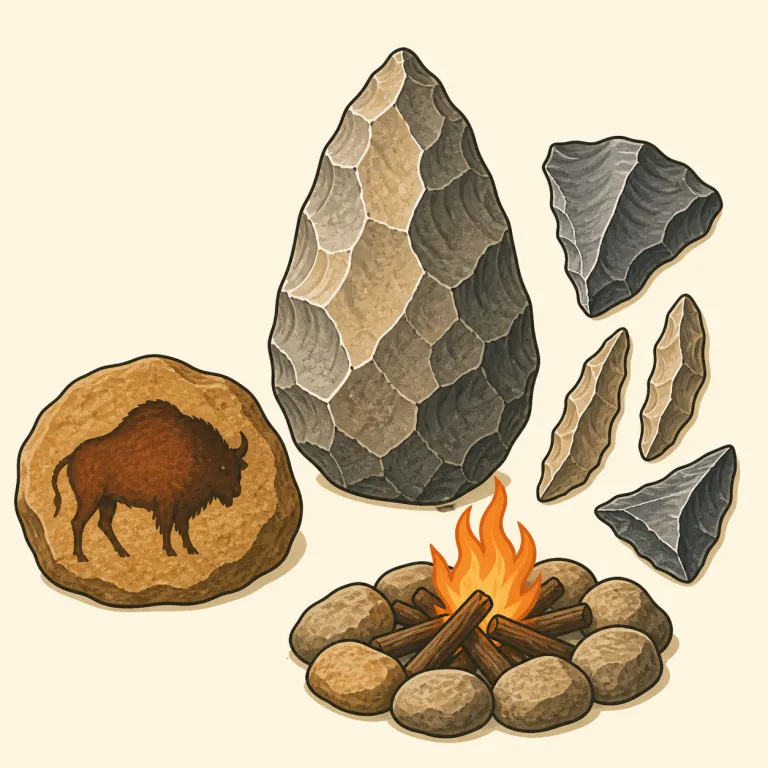
旧石器時代の
解説 Definition
旧石器時代に属すること、またはその時代の人類・文化・道具・遺跡などに関することを表す語。考古学や歴史の文脈で、打製石器を用いた最古の石器時代に関連する事物を説明するときに使われる。
Palaeolithic describes the earliest part of the Stone Age, when humans used very simple stone tools. The word is used in history, archaeology, and anthropology to talk about very ancient human life. The American spelling is usually "Paleolithic."
覚え方のコツ Memory Tip
まず paleontology(古生物学)の paleo- を思い出すと、「かなり古い時代の話だ」と入れやすいです。さらに lith が monolith などの「石」系で見えるので、palaeolithic は『古い石の時代に関する』で固定できます。考古学では Palaeolithic tools / sites / humans の形で出やすく、打製石器・狩猟採集のイメージと結びつけると残りやすいです。Neolithic(新石器時代の)と対で覚えると整理しやすく、つづりは米式 paleolithic、英式 palaeolithic の両方に注意。
Use two parts: `palaeo-/paleo-` for something ancient, and `lith` for stone. That gives you a clear memory frame: `ancient stone`. It is easier to remember if you learn it next to `Neolithic`, which is the later stone age. Also note the spelling pair: British `palaeolithic`, American `paleolithic`.
例文
Palaeolithic humans crafted simple stone tools for hunting and gathering food.
旧石器時代の人々は、狩りや食料採集のために簡素な石器を作った。
The cave paintings discovered in France date back to the Upper Palaeolithic period.
フランスで発見された洞窟壁画は、後期旧石器時代までさかのぼる。
Palaeolithic archaeological sites provide crucial evidence about early human migration patterns.
旧石器時代の考古遺跡は、初期人類の移動パターンを知るうえで重要な証拠となる。
palaeolithic の類義語・関連語
palaeolithic の語源・成り立ち Etymology
palaeolithic は palaeo-「古い」+ lith「石」+ -ic。ギリシャ語 palaios「古い」と lithos「石」に由来し、paleontology や monolith も同じ語根を含みます。つまり字義どおり「古い石の時代」で、石器で時代を区切る発想がそのまま語になっています。
Palaeolithic is built from Greek roots meaning old and stone: palaios and lithos. The first part also appears in words like paleontology, and the second in words like monolith. The term was created to describe a period identified by ancient stone tools, so its literal sense is simply 'old stone.'
同じレベルの語彙をもっと
外部辞書で調べる
この英単語をクイズで覚えよう