古生物学
解説 Definition
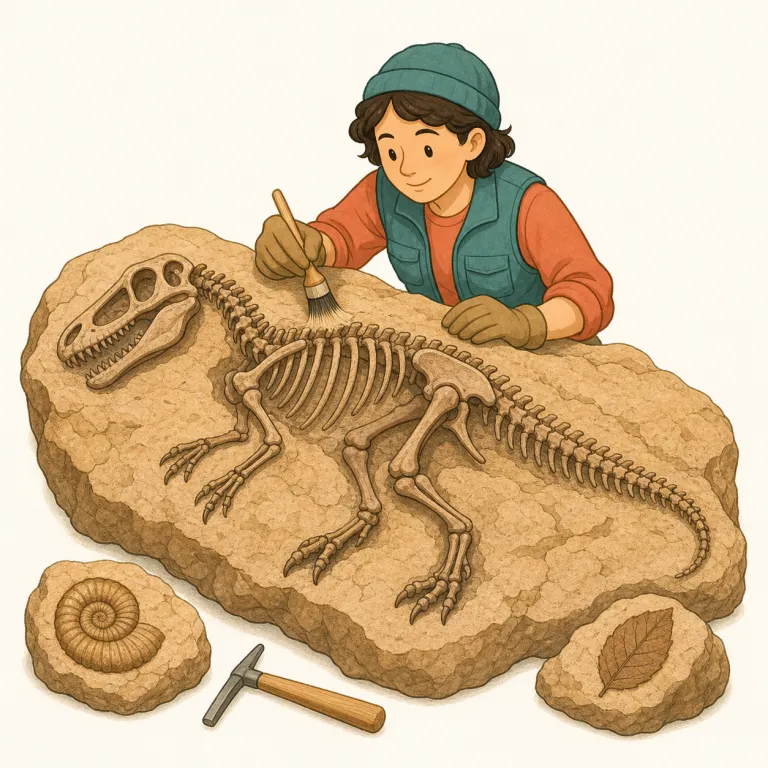
古生物学は化石の形態や分布から、過去の生物がどのように進化し、どんな環境で暮らしていたのかを明らかにする学問である。発掘された骨格や殻、足跡などをもとに絶滅した生物の構造や生活様式を復元し、地球の歴史のなかでの生命の変遷を描き出す。
Paleontology is the scientific study of ancient life through fossils. It includes learning about extinct animals, plants, and the environments they lived in. The word is often used in science and history contexts.
覚え方のコツ Memory Tip
-logy は biology, geology と同じく「学問」を表すので、まず「何かを研究する分野」だとつかむ。記憶の軸は fossil, dinosaur, skeleton。博物館で恐竜の骨格標本や化石展示を見て、「これは paleontology の世界だ」と場面ごと覚えると強い。紛らわしい archaeology は人間の遺物中心だが、paleontology は古い生物そのものを化石からたどる学問、という差で整理すると忘れにくい。
Use the ending `-logy`, as in `biology` or `geology`, to remember it is a field of study. Then connect it with strong museum images: fossils, dinosaur bones, and skeletons. A useful contrast is `archaeology`, which is about human remains and objects, while `paleontology` is about ancient life itself.
例文
Paleontology helps us understand the history of life on Earth.
古生物学は地球上の生命の歴史を理解するのに役立ちます。
The paleontology department discovered a new dinosaur species.
古生物学部門は新しい恐竜種を発見しました。
Students of paleontology spend years studying fossils.
古生物学の学生は化石の研究に数年を費やします。
paleontology の類義語・関連語
紛らわしい語
paleontology の語源・成り立ち Etymology
paleontology はフランス語 paléontologie から入り、ギリシャ語系の paleo-「古い」+ onto-「存在するもの」+ -logy「学問」から成ります。つまり「大昔の生き物の存在を研究する学問」で、化石を通して古生物を探る意味が語形にそのまま出ています。関連語は ontology、Paleolithic。
Paleontology came into English through French paléontologie and is built from Greek parts: paleo- "ancient," onto- "being" or "existing thing," and -logy "study." The word was formed to mean the study of ancient life and beings from the distant past. Related words include ontology and Paleolithic.
同じレベルの語彙をもっと
外部辞書で調べる
この英単語をクイズで覚えよう