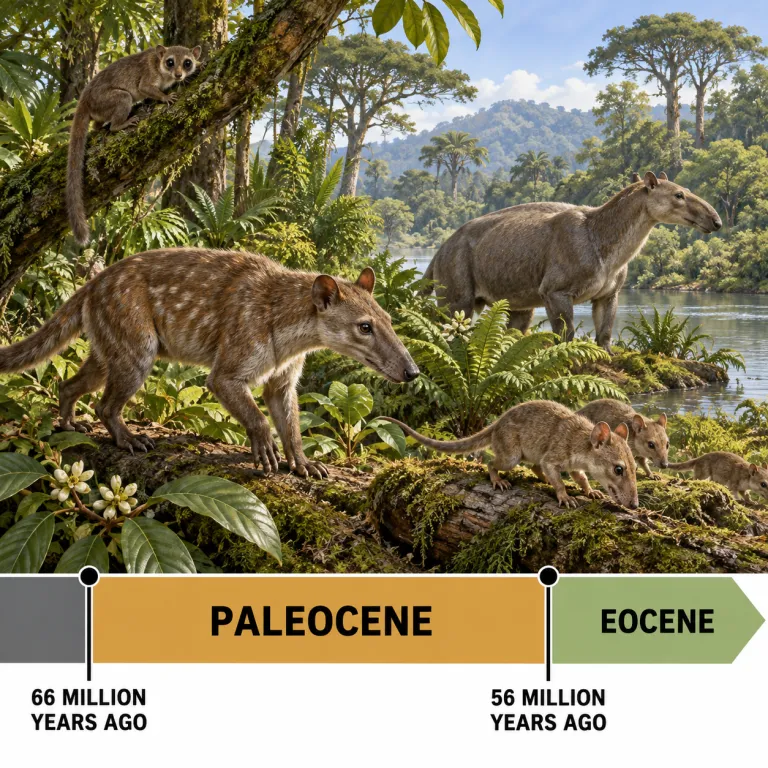
暁新世
解説 Definition
暁新世。地質学的な時代区分。新生代古第三紀の最初の紀。約6600万年前から約5600万年前までの時期。
The Paleocene is a period in Earth's history that came after the extinction of the dinosaurs, about 66 to 56 million years ago. It is used in geology and paleontology to describe the earliest part of the Paleogene Period. The word is usually written with a capital letter.
覚え方のコツ Memory Tip
`paleo-` は paleontology や Paleolithic にも出るので、「古い時代・昔のもの」を示すまとまりとして覚えると定着しやすいです。さらに地質時代名で `-cene` が付く語は Eocene, Miocene, Pliocene など同じシリーズなので、Paleocene もその一員だと押さえると見分けやすくなります。単語単体で暗記するより、「恐竜絶滅のあと、まず Paleocene、次が Eocene」という年代の並びで覚えると忘れにくいです。
Use the parts: `paleo-` often appears in words about ancient times, like `paleontology`. Then notice `-cene`, which appears in other time names such as `Eocene` and `Miocene`. It is easier to remember `Paleocene` as one member of that geology series.
例文
The Paleocene began about 66 million years ago, after a mass extinction.
暁新世は、大量絶滅の後、およそ6600万年前に始まった。
Mammals diversified during the Paleocene, filling newly vacant ecological roles.
暁新世には哺乳類が多様化し、空いた生態的地位を埋めていった。
The Paleocene ended roughly 56 million years ago as the Eocene began.
暁新世は約5600万年前に終わり、始新世へと移行した。
paleocene の語源・成り立ち Etymology
Paleocene はギリシャ語 palaios「古い」+ kainos「新しい」に由来し、-cene は地質時代名で「新しい時代」を示します。恐竜絶滅後に始まる最初期の新生代なので、「古い新時代」という感覚になり、paleolithic や Cenozoic も同じ語根です。
Paleocene comes from Greek palaios, meaning "old," and kainos, meaning "new." In geology, -cene names parts of the Cenozoic era, so the word suggests the "oldest part of the new age." The same roots appear in words like paleolithic and Cenozoic.
同じレベルの語彙をもっと
外部辞書で調べる
この英単語をクイズで覚えよう