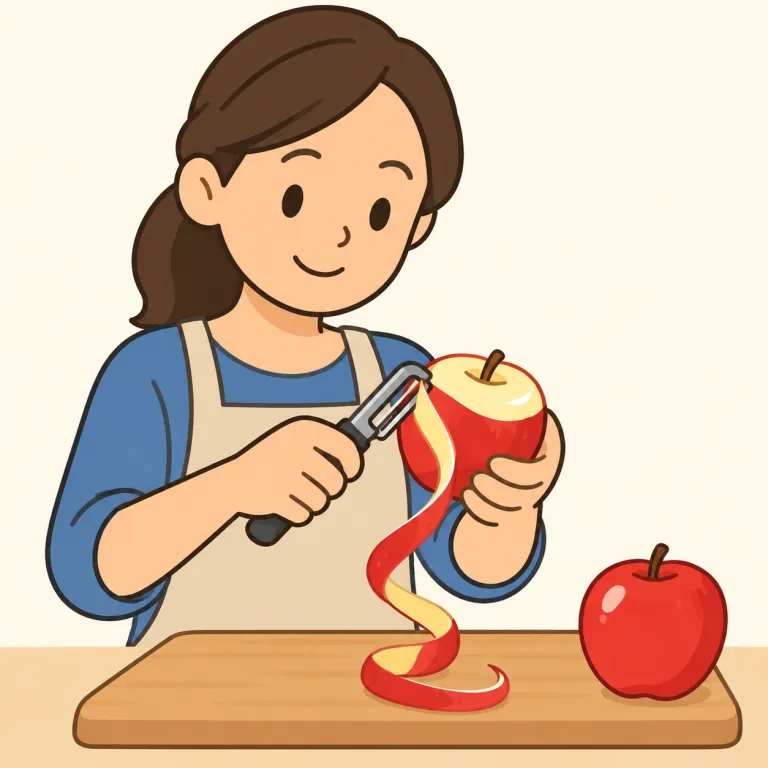
皮むき
解説 Definition
paring は pare(皮をむく、少しずつ削る)の現在分詞・動名詞です。果物や野菜の皮むき、または薄く削り取る行為を表します。
The act of removing the skin or outer edge of fruit, vegetables, or another object by cutting off thin layers. It is the gerund of pare and emphasizes careful, limited cutting rather than removing large pieces.
覚え方のコツ Memory Tip
原形 pare「皮や縁を薄く削る」に -ing を付ける際、語末の e を落として paring となり、発音は pare に /ɪŋ/ を加えます。paring apples、paring a pear のように、ナイフで果皮を薄く取り除く場面で覚えましょう。peeling より、刃物で少量ずつ削る感覚が強い語です。
Link paring to the base verb pare, “to cut away a thin outer layer.” Drop the final e before adding -ing; the pronunciation adds an “ing” sound to pare. Picture someone using a small knife to pare an apple while preserving as much fruit as possible. This careful removal distinguishes paring from rough chopping. Peeling is the broader everyday term for removing skin, while paring strongly suggests cutting thin strips or small amounts with a blade. Do not confuse it with pairing, which means putting two things together.
例文
Paring apples takes time if the knife is dull.
ナイフの切れ味が悪いと、りんごの皮むきには時間がかかります。
She is paring a pear for the child.
彼女は子どものために洋梨の皮をむいています。
Careful paring helps keep more of the fruit.
丁寧に皮をむくと、果物をより多く残せます。
paring の類義語・関連語
paring の語源・成り立ち Etymology
古フランス語 parer(準備する、皮をむく)からの派生で、ラテン語 parāre(用意する)が語源。pare(皮をむく)に動名詞接尾辞 -ing がついた形。関連語に prepare(pre-+parāre=前もって準備する)がある。果物の皮を「整える」行為が原義。
Paring is formed from pare by dropping the final e and adding -ing. Pare entered English through Old French parer, which could mean “to prepare, trim, or adorn,” from Latin parare, “to prepare.” The sense narrowed in English to trimming an edge or cutting away an outer layer. Prepare is historically related, combining the same Latin base with the prefix pre-.
同じレベルの語彙をもっと
外部辞書で調べる
この英単語をクイズで覚えよう