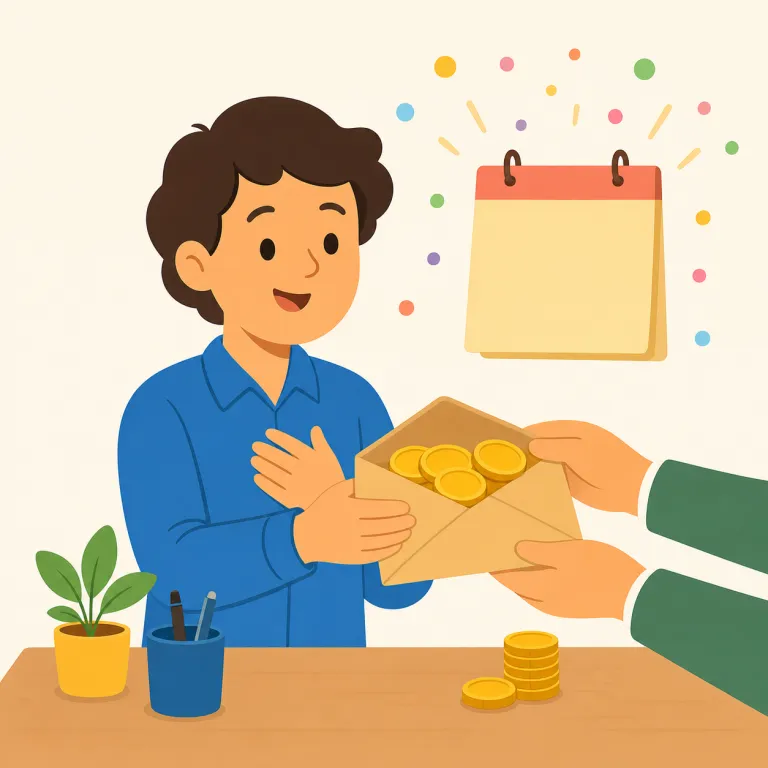
大もうけ、巨額の報酬
noun 名詞口語で、取引、契約、勝負などによって得る多額の金銭や大きな利益を指す。a big payday の形が典型的で、実際に給料が支払われる日ではなく、得られた報酬そのものを表す。
会社や組織が従業員に給料を支払う日のこと。多くの企業では月に一度、決まった日に給料が支払われます。
Payday is the day when a worker receives their salary or wages. It is commonly used in everyday life and work-related situations. The exact payday may be weekly, every two weeks, or monthly, depending on the job.
pay + day で、そのまま「支払いの日」。まず形が非常に素直なので、分解して覚えるのが最短です。money や salary そのものではなく、「給料が入るタイミング」を指す名詞だと押さえるとずれません。on payday(給料日に), wait until payday(給料日まで待つ)の形でよく出ます。monthly salary は金額、payday は日付という役割の違いを意識すると定着しやすいです。
This word is easy to remember because it is simply `pay` + `day`. It does not mean the money itself, but the day when you receive it. Fix it with common phrases like `on payday` and `wait until payday`.
Friday is payday, so everyone is in a good mood.
金曜日は給料日なので、みんなが上機嫌です。
I always pay my bills on payday.
私は給料日にいつも請求書を支払います。
The company moved payday from the 25th to the 20th.
その会社は給料日を25日から20日に変更しました。
文脈によって、次の意味でも使われます。
口語で、取引、契約、勝負などによって得る多額の金銭や大きな利益を指す。a big payday の形が典型的で、実際に給料が支払われる日ではなく、得られた報酬そのものを表す。
payday は pay + day の複合語ですが、pay は古フランス語 payer を経てラテン語 pacare「満足させる・清算する」に由来します。pacify や peace と同じ pac- 系で、相手をきちんと満たして一区切りつける日だと見ると「給料日」の感覚がよく見えます。
"Payday" is formed from "pay" and "day." "Pay" came through Old French payer from Latin pacare, which meant to satisfy, settle, or bring peace. So the word originally carried the sense of settling what is owed, which fits the idea behind the compound; related words include "peace" and "pacify."
この英単語をクイズで覚えよう