誘電率
解説 Definition
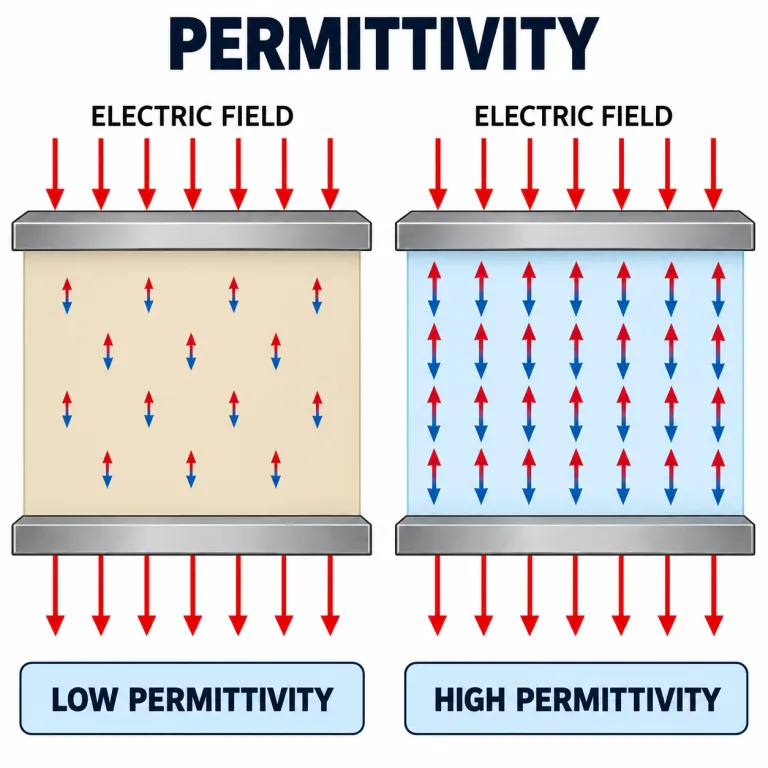
材料が外部の電場に対して示す分極の程度を表す物理量。電磁気学における重要な材料定数で、物質の電気的性質を決定する。
Permittivity is a physical property that shows how easily a material allows an electric field to pass through it or affect it. It is used in physics and engineering, especially when discussing electricity, capacitors, and insulating materials.
覚え方のコツ Memory Tip
permit を知っていると入りやすい語。『その物質が電場の影響をどれだけ受け入れて、内部で電荷の偏りを作りやすいか』の度合いだと押さえると残りやすい。-ivity は conductivity, sensitivity などと同じく『性質・度合い』を表す形。教科書では vacuum permittivity, relative permittivity の形でもよく出る。conductivity は電気の流れやすさ、permeability は磁場側の量で、名前の近さで混同しやすい。
Build it from `permit` + `-ivity`. The ending `-ivity` often means a quality or degree, like in `conductivity`. So `permittivity` is the degree to which a material allows an electric effect inside it.
例文
The permittivity of free space is a fundamental constant in physics.
自由空間の誘電率は物理学の基本定数である。
Different materials have different permittivity values at various frequencies.
異なる材料は異なる周波数で異なる誘電率の値を持つ。
The relative permittivity of water is much higher than that of air.
水の相対誘電率は空気よりもはるかに高い。
permittivity の類義語・関連語
紛らわしい語
permittivity の語源・成り立ち Etymology
permittivity はラテン語 permittere「通す・許す」に由来し、per-「通して」+ mittere「送る」が核です。物質が電気的作用をどれだけ通しやすいかという発想が、「誘電率」という意味に表れています。emit や transmit も同じ mittere の仲間です。
Permittivity comes from permit, which goes back to Latin permittere, meaning "to let through" or "allow." Its parts are per- "through" and mittere "to send." In science, the word developed to describe how well a material allows electric influence to pass through it. Emit and transmit come from the same Latin root.
同じレベルの語彙をもっと
外部辞書で調べる
この英単語をクイズで覚えよう