オペラント
解説 Definition
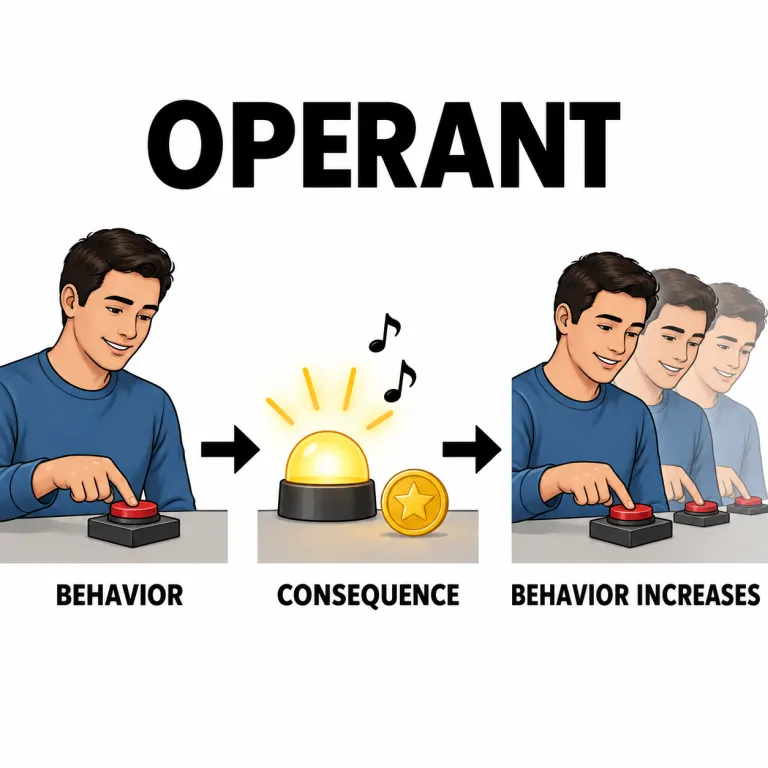
心理学で、環境に働きかけ、その結果によって増えたり減ったりする行動を指します。報酬や罰と結びついて学習される反応を表す語です。
In psychology, an operant is a type of behavior that affects the environment and is shaped by its results. If the behavior is rewarded or punished, it may happen more or less often in the future. This word is mainly used in learning theory and behavior studies.
覚え方のコツ Memory Tip
operate / operation を知っていると覚えやすいです。核は「働く・作用する」で、operant は“環境に働きかける側の行動”。心理学ではほぼ operant conditioning の形で出会い、レバーを押す・ボタンをつつくなど、行動のあとに reward や punishment が続き、その結果として行動頻度が変わる場面で使います。stimulus に受け身で反応する respondent と対比し、「自分から動いて結果を生む能動的な反応」と整理すると定着しやすいです。
Connect it to `operate` or `operation`, which give the sense of acting or working. In psychology, `operant` often appears in `operant conditioning`, so remember it as a technical word you usually meet in that set phrase. A good image is an animal pressing a lever and then getting a result.
例文
In the experiment, pressing the lever was the operant.
その実験では、レバーを押すことがオペラントでした。
The researcher identified each operant before measuring reinforcement.
研究者は強化を測定する前に、それぞれのオペラントを特定しました。
An operant changes in frequency depending on its consequences.
オペラントはその結果に応じて頻度が変化します。
operant の類義語・関連語
紛らわしい語
operant の語源・成り立ち Etymology
ラテン語 operari「働く・作用する」に由来する oper-「仕事・働き」が核で、-ant は「…するもの」を表します。つまり operant は「実際に働きかけるもの」というのが原義で、心理学でも環境に作用して結果を生む反応という感覚です。関連語は operate, operation。
Operant comes from Latin operari, meaning "to work" or "to act," built on a root about work or activity. The ending -ant means "doing" or "acting," so the word originally suggests something that is actively working. That sense later shaped its use for something that produces an effect, and it is related to operate and operation.
同じレベルの語彙をもっと
外部辞書で調べる
この英単語をクイズで覚えよう