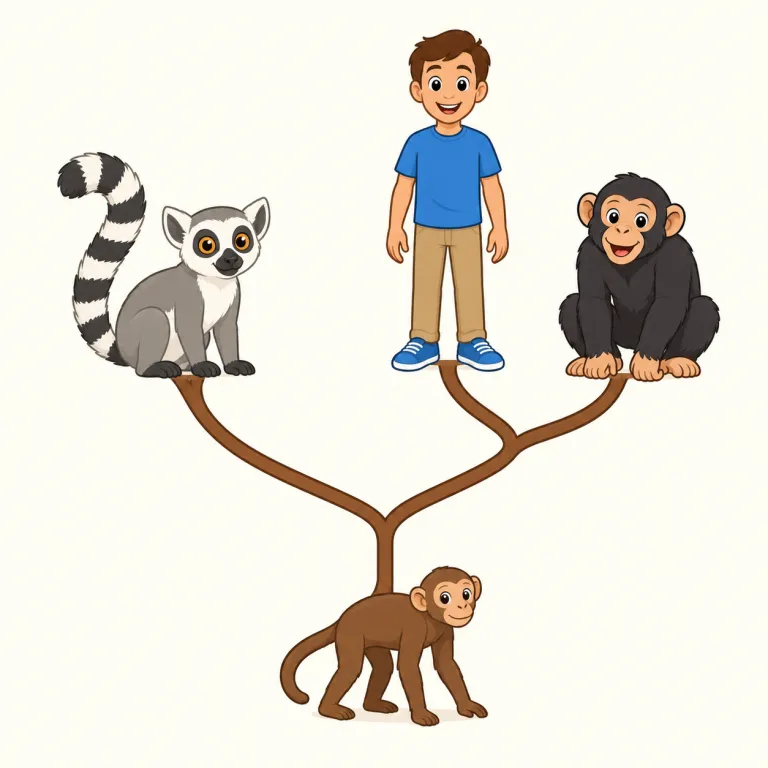
系統発生的に
解説 Definition
系統発生的に;進化の歴史に基づいて。生物学の分類において。
Phylogenetically means in a way that relates to the evolutionary history or family relationships of living things. It is used when comparing species based on how they developed over time. This is a formal word mostly used in biology.
覚え方のコツ Memory Tip
まず形を3つに分けて覚えると扱いやすいです。phylo- / genetic / -ally。特に genetically を知っていれば、「遺伝子的に」ではなく、そこに phylo- が付いて“進化の系統・枝分かれ”の観点が加わる語だとつかめます。生物学では phylogenetic tree, phylogenetic relationship のように、種どうしの近さや分岐を語る場面でよく出ます。genetically が個々の遺伝子寄り、phylogenetically は種の歴史的なつながり寄り、と対比すると混同しにくいです。
This long word is easier if you cut it into `phylo-`, `genetic`, and `-ally`. If you already know `genetically`, add `phylo-` to shift the meaning toward evolutionary family relationships and branching. It often appears with `phylogenetic tree` or `phylogenetic relationship`, which helps fix the pattern.
例文
Phylogenetically, humans share common ancestry with primates.
系統発生的に、人間は霊長類と共通の祖先を共有している。
The genes are phylogenetically conserved across species.
遺伝子は種をまたいで系統発生的に保存されている。
Phylogenetically related organisms often have similar traits.
系統的に近縁な生物は、しばしば似た特徴を持つ。
phylogenetically の類義語・関連語
phylogenetically の語源・成り立ち Etymology
phylogeny はギリシャ語 phylon「種族・部族」+ genesis「起源・誕生」から作られた学術語で、そこに -ic と -ally が付いて副詞化した語です。genesis や genealogy と同じく「生まれや由来」を見る感覚があり、「系統の成り立ちから見て」の意味になります。
"Phylogenetically" comes from "phylogeny," a scientific word built from Greek phylon, meaning "tribe" or "race," and genesis, meaning "origin" or "birth." The endings -ic and -ally turned it into an adverb. Its sense grew into "in terms of evolutionary origin or family line," with the same root idea of beginnings seen in "genesis" and "genealogy."
同じレベルの語彙をもっと
外部辞書で調べる
この英単語をクイズで覚えよう