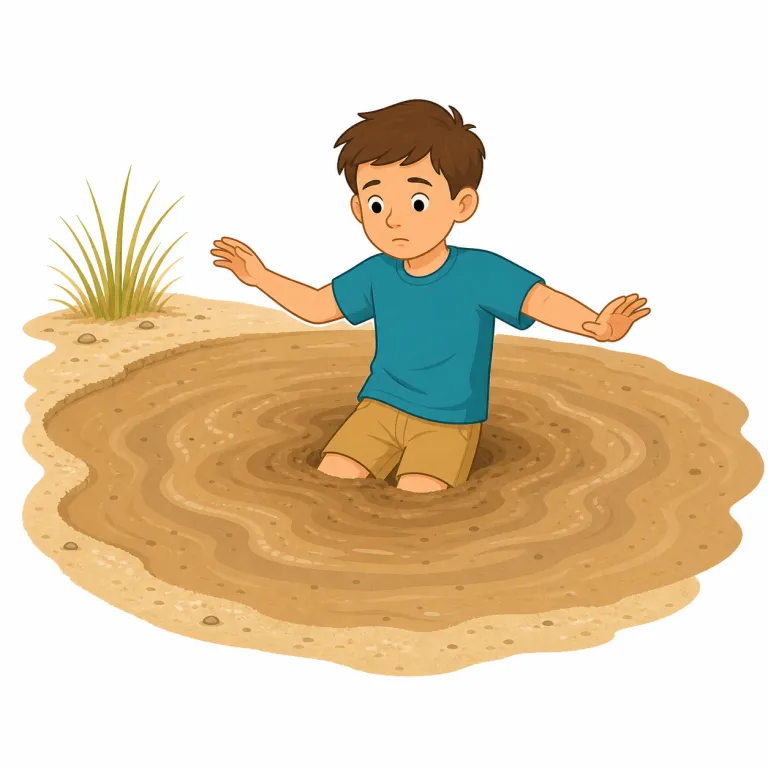
抜け出しにくい窮地、泥沼
noun 名詞いったん関わると次第に深くはまり、容易には抜け出せない困難な状況を比喩的に指す。政治的対立や借金など、対処するほど事態が悪化しかねない問題について使われる。
砂地が地下水の影響を受けて、固い地面のように見えるが、実際には非常に不安定で人や物が沈み込む危険な状態の土地。流動する砂の地質状況。
Quicksand is wet sand that looks solid but becomes soft and unstable when pressure is put on it. A person or animal can sink into it, so it is often mentioned in stories about danger or survival.
quick をいつもの「速い」で取るとズレるので注意。quicksand は「すばやい砂」ではなく、足元の砂が落ち着かず、踏むと支えきれず沈ませる危険な砂地と場面ごと覚えると残りやすい。映画や冒険物で、人がじわっと sink into quicksand して抜け出せなくなる場面を思い浮かべると定着する。sand が付くので beach の普通の砂と混同しやすいが、安全な砂浜ではなく danger のある地面。be trapped in quicksand まで一緒に覚えると使い方も見えやすい。
Do not read quick here as only "fast." Think of quicksand as sand that is not firm under your feet, so you can sink into it. Picture an adventure scene with someone trapped in quicksand, and remember the common phrase "sink into quicksand."
The explorer was warned to avoid the quicksand in the desert.
探検家は砂漠の流砂を避けるよう警告された。
Quicksand can be extremely dangerous if you get trapped in it.
流砂にはまると非常に危険だ。
The local guide warned us that the quicksand could pull us down.
地元のガイドは、流砂に足を取られて沈むおそれがあると警告した。
文脈によって、次の意味でも使われます。
いったん関わると次第に深くはまり、容易には抜け出せない困難な状況を比喩的に指す。政治的対立や借金など、対処するほど事態が悪化しかねない問題について使われる。
quicksand は quick と sand の複合語で、quick は古英語 cwic「生きた・動く」、sand は古英語 sand に由来します。ここでの quick は「速い」ではなく「動いて定まらない」という古い意味で、quicken や quicksilver と並べると、「流れるように動く砂」から流砂の意味になったと納得できます。
Quicksand is a compound of Old English quick and sand. Here quick had its older meaning "alive" or "moving," not the modern sense "fast." The idea was sand that seems to move or shift by itself, which led to the present meaning. Related English words include quicken and quicksilver.
この英単語をクイズで覚えよう