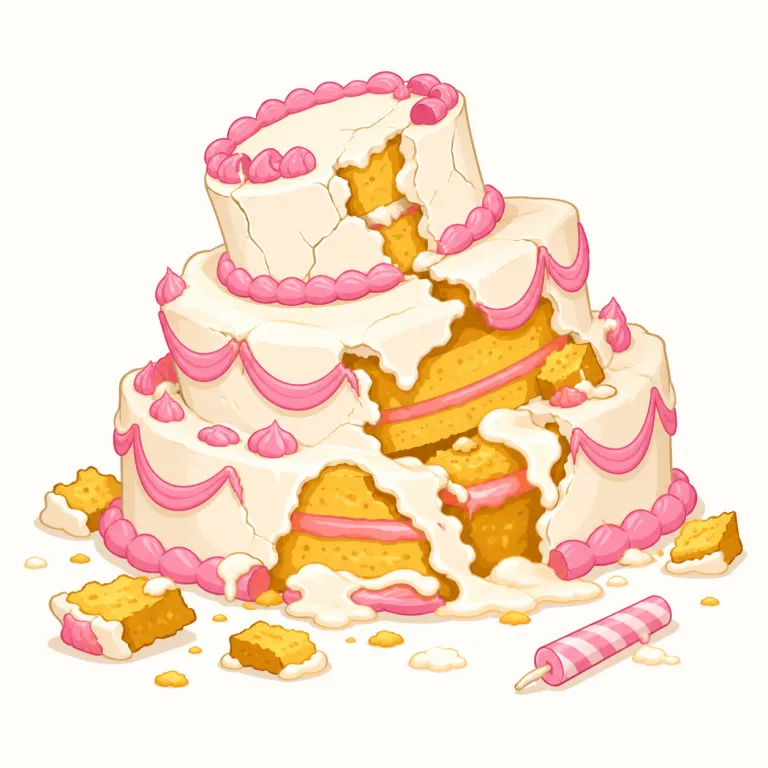
破産した、経済的に破綻した
adjective 形容詞人や会社が財産や資金を失い、経済的に破綻した状態を表す。be financially ruined や a ruined businessman のように使い、物や計画の損傷ではなく、生活や事業を脅かすほど金銭を失ったことをいう。
完全に破壊された、または台無しにされた状態。価値がなくなるほど損なわれたことです。
Ruined means badly damaged, spoiled, or destroyed so that something is no longer good or useful. It can describe physical things, plans, events, or feelings. In informal use, it can also mean something was completely spoiled or made much worse.
ruin を知っていれば ruined はかなり覚えやすいです。まず「ruin = 台無しにする・破滅させる」を押さえ、-ed が付いて「台無しにされた状態」と見ます。壊れた物だけでなく、ruined plans, ruined reputation, ruined day のように計画・評判・一日にも広く使えるのがポイント。broken よりも「もう価値や状態が大きく損なわれた」感じが強めです。in ruins(廃虚の状態)も一緒に覚えると定着します。
Build it from `ruin` plus `-ed`: `ruined` means something has been put into a badly damaged state. It is often used not only for things, but also for `ruined plans`, `a ruined day`, or `a ruined reputation`. That makes it stronger than just `broken`.
The flooded basement left several boxes completely ruined.
地下室が水浸しになり、いくつかの箱が完全に駄目になりました。
Our carefully planned picnic was ruined by sudden rain.
入念に計画したピクニックは突然の雨で台無しになりました。
They managed to restore the ruined photograph.
彼らは台無しになった写真をなんとか修復しました。
文脈によって、次の意味でも使われます。
人や会社が財産や資金を失い、経済的に破綻した状態を表す。be financially ruined や a ruined businessman のように使い、物や計画の損傷ではなく、生活や事業を脅かすほど金銭を失ったことをいう。
ruined は ruin に形容詞・過去分詞を作る -ed が付いた語で、ruin は古フランス語を経てラテン語 ruina「崩壊」に由来します。さらに語根は ruere「突進して崩れ落ちる」で、物や計画が崩れて「台無し」の感覚が出ます。関連語に ruin、ruinous があります。
Ruined is formed from ruin plus the ending -ed, and ruin came into English through Old French from Latin ruina, meaning "collapse" or "fall." It is related to Latin ruere, "to rush down" or "fall violently." The sense developed from physical falling down to anything spoiled, destroyed, or broken beyond repair, as in ruin and ruinous.
この英単語をクイズで覚えよう