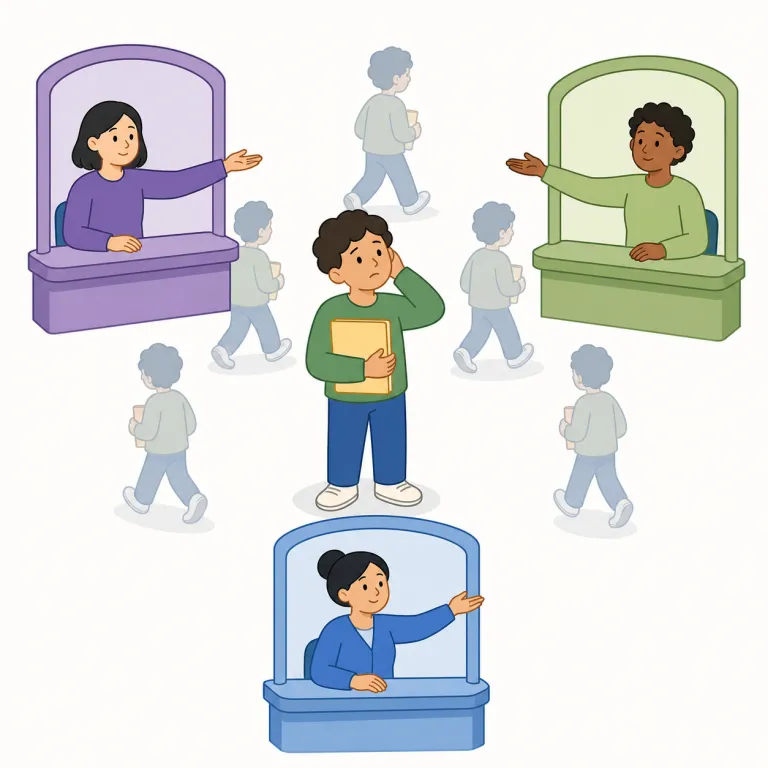
たらい回し
解説 Definition
問題や要求に対して直接的に対応せず、複数の人や部署に次々と回されること。また、そうした対応を遅延させる行為。
A runaround is a frustrating situation in which someone does not give you a clear answer or proper help. You may be sent from one person, office, or excuse to another without getting what you need. This is an informal word, often used about customer service or bureaucracy.
覚え方のコツ Memory Tip
runaround は run + around で、「相手がその場をぐるぐる回るだけで前に進まない」場面を思い浮かべると残りやすい。単なる delay より、担当者を変えられたり別部署へ回されたりして、わざとはぐらかされる感じが強い。特に give someone the runaround で「人をたらい回しにする」が頻出。run around は本来「走り回る」だが、名詞の the runaround になると事務対応の不誠実さを指す点に注意。
See it as `run` + `around`: you keep going around, but never get anywhere. That helps you remember the idea of being sent from person to person with no real progress. The key phrase is `give someone the runaround`.
例文
The company gave him the runaround instead of solving the issue.
その会社は問題を解決する代わりに、彼をたらい回しにした。
Customers complained about getting the runaround from support.
顧客はサポート部門にたらい回しにされたと不満を訴えた。
After weeks of the runaround, he finally got an answer.
数週間のたらい回しの末、彼はようやく答えを得た。
runaround の類義語・関連語
類義語
runaround の語源・成り立ち Etymology
runaround は run around という句からできた名詞。run は古英語 rinnan/ærnan、around は round 系で、「ぐるぐる走り回らせる」像がそのまま下敷きにある。そこから人を要件の核心に入れず、あちこち回してはぐらかす「たらい回し」の意味になった。関連語は run, runner。
Runaround was formed in English from the phrase run around. Run comes from Old English verbs such as rinnan and ærnan, while around is related to round. The original image was of being sent from place to place in circles, and this later became the idea of being delayed or passed around instead of getting a direct answer. Related words include run and runner.
同じレベルの語彙をもっと
外部辞書で調べる
この英単語をクイズで覚えよう