抗原性の
解説 Definition
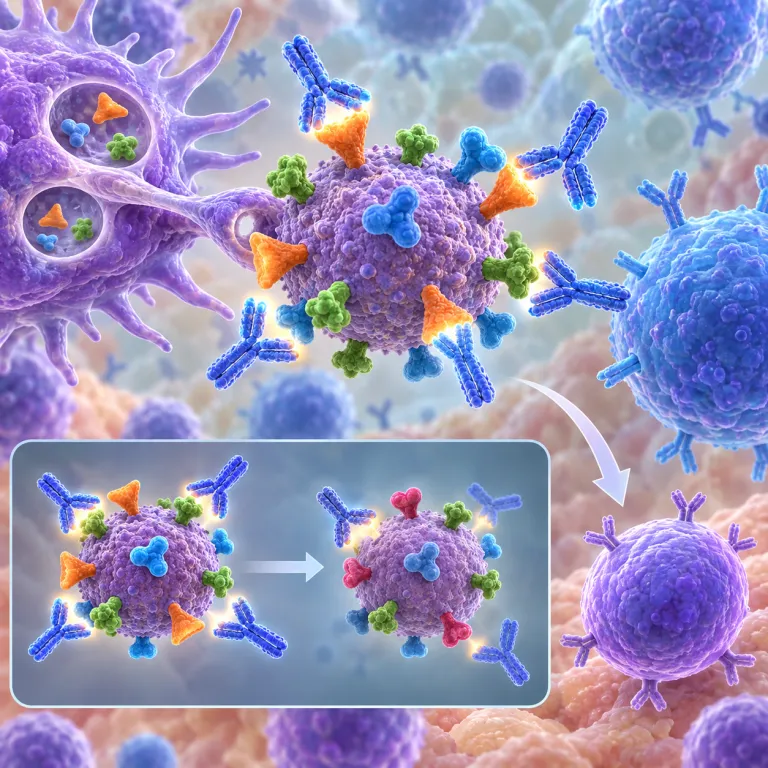
抗原性を持つ。免疫系を刺激して抗体産生を引き起こすことができる物質の特性。異物として免疫系に認識される分子や細胞の性質。
Antigenic means able to cause the body's immune system to react. It describes a substance, often part of a virus or bacterium, that the body recognizes as foreign. The word is mainly used in immunology and medical science.
覚え方のコツ Memory Tip
まず antigen(抗原)を知っていれば、antigenic は「抗原として働く性質のある」と見て覚えやすいです。-ic は academic, organic などと同じく「〜に関する」という形容詞の型。医学・生物では antigenic protein, antigenic change のように、免疫系に見つかって反応を起こす対象を述べる場面でよく出ます。antibiotic の anti- に引っぱられて「何かに対抗するもの」と取らず、こちらは体が異物として認識する“側”の性質だと整理すると混同しにくいです。antigenicity もセットで覚えると定着します。
If you know antigen, antigenic becomes much easier: it is simply the adjective form with -ic. Keep it separate from anti- words like antibiotic, because this word is not about fighting something. A good memory hook is that antigenic often appears before nouns like change, protein, or response in biology texts.
例文
The antigenic properties of the virus made it suitable for vaccine development.
そのウイルスは抗原性を持つため、ワクチン開発に適していた。
Proteins on the cell surface can be highly antigenic, triggering immune responses.
細胞表面のタンパク質は高い抗原性を持ち、免疫反応を誘発する。
Scientists study antigenic variations to predict how viruses might evolve.
科学者は抗原性の変化を研究して、ウイルスがどのように進化するか予測する。
antigenic の類義語・関連語
antigenic の語源・成り立ち Etymology
antigenic は antigen + -ic。antigen は独仏系の学術語で、anti-「対抗する」+ -gen「生み出す」から成り、体内で抗体反応を起こさせるものという発想です。generate や genesis も同じ gen 系です。
Antigenic comes from antigen plus the adjective ending -ic. Antigen is a modern scientific term built from anti- meaning "against" and -gen meaning "producing," with the idea of something that produces an opposing reaction in the body. The meaning then expanded into the adjective form antigenic. Related words from the same root include generate and genesis.
同じレベルの語彙をもっと
外部辞書で調べる
この英単語をクイズで覚えよう