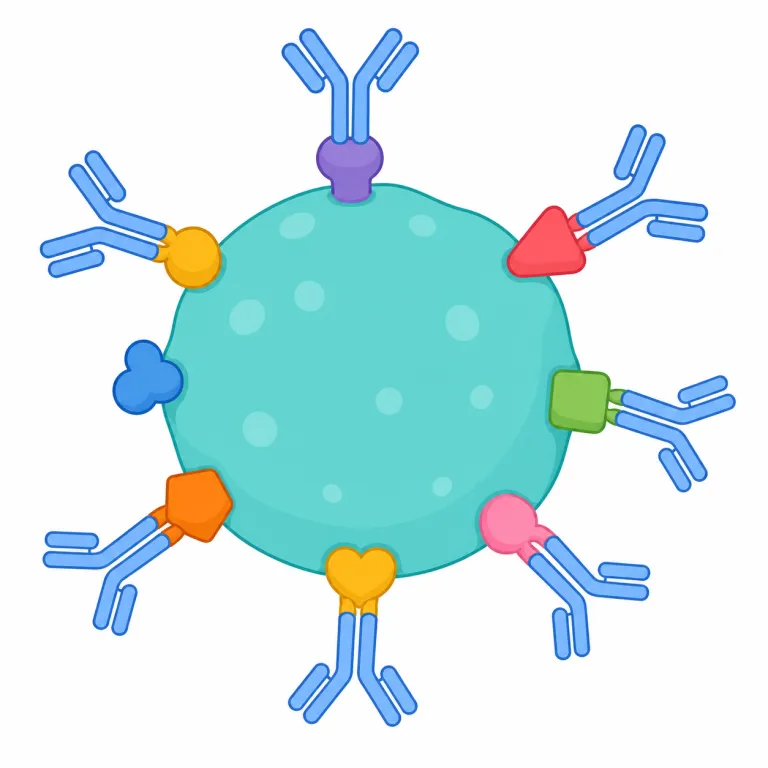
antigen
antigen は英検1級レベルの英単語で、「抗原」という意味があります。発音記号は /ˈæntɪdʒən/ です。
抗原
解説 Definition
病原体や感染物質に対して体が反応するために、免疫系が認識する物質。ワクチンや感染症に関連して、免疫応答を引き起こす異物。
An antigen is a substance that causes the body's immune system to react, often by producing antibodies. It is a scientific and medical term commonly used for parts of viruses, bacteria, or other foreign substances.
覚え方のコツ Memory Tip
antigen は antibody(抗体)と必ず対で覚えると定着しやすい語。違いは、antigen が体内で「見つかって免疫反応を起こさせる側」、antibody がそれに対抗して「後から作られる側」。語尾の -gen は pathogen, allergen などにもあり、「何かを生じさせるもの」の仲間だと見ると整理しやすい。ワクチン、virus、immune response、detect an antigen などの文脈で頻出。anti- を見て「反対する物」と取らず、「抗体に反応される対象」「免疫の引き金」と押さえると antibody との混同を防ぎやすい。
Learn `antigen` together with `antibody` so you do not mix them up. An antigen is the thing that triggers the immune response, while an antibody is what the body makes against it. The ending `-gen` also appears in words about causing or producing something.
例文
The vaccine introduces an antigen that trains the immune system to fight the virus.
ワクチンは抗原を体内に入れ、ウイルスと戦えるよう免疫系に覚えさせます。
The body produces antibodies to combat the antigen during an infection.
感染すると、体は抗原と戦うための抗体を作ります。
Scientists studied the antigen structure to develop a more effective vaccine.
科学者はより効果的なワクチンを開発するために抗原の構造を研究しました。
antigen の類義語・関連語
派生語
antigen の語源・成り立ち Etymology
antigen は anti(body) + -gen からできた近代語で、-gen はギリシャ語由来の「生み出すもの」を表します。allergen や pathogen と同じ要素を含み、「抗体を生じさせるもの」と分かると、抗原が免疫反応の引き金だと見えてきます。
Antigen is a modern scientific word formed from anti(body) and -gen, an element from Greek meaning producing or generating. It was created to mean something that produces antibodies in the body. The same ending appears in words like allergen and pathogen.
同じレベルの語彙をもっと
英検1級の一覧へ →外部辞書で調べる
この英単語をクイズで覚えよう