antibody
抗体
解説 Definition
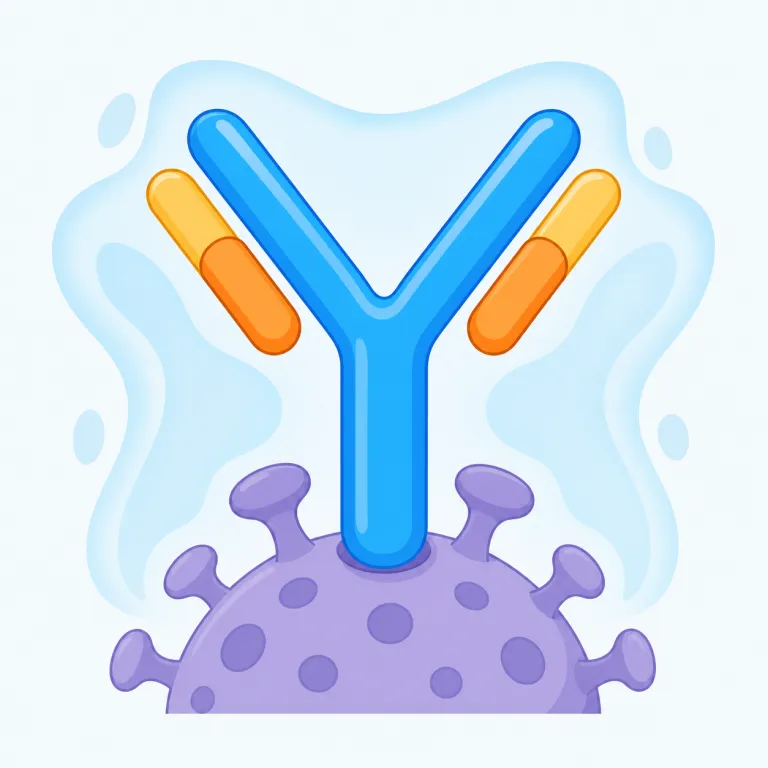
抗体とは、体内に侵入した細菌やウイルスなどの異物(抗原)に対して免疫系が作り出すタンパク質のことです。抗体は抗原に結合して無害化する働きをします。ワクチン接種によって抗体を事前に作ることもできます。
An antibody is a protein made by the body to fight harmful substances such as viruses or bacteria. It is an important part of the immune system and helps protect the body from disease.
覚え方のコツ Memory Tip
anti- は ant-virus, anti-smoking などでも出る「〜に対抗する」の定番パターン。antibody も body をそのまま指すのでなく、「体内で異物に対抗するもの」とつかむと覚えやすい。特に antibodies against the virus, produce antibodies の形でよく見かけるので、ウイルスや細菌にぶつかって守る防御役として場面ごと覚えると定着する。antigen は攻め込む側、antibody は迎え撃つ側、と対で整理すると混同しにくい。
Use the prefix `anti-` as your memory hook: it means against or fighting against. So an `antibody` is something in the body that fights back. It is easier to remember if you pair it with `antigen`: the antigen is the invader, the antibody is the defender.
例文
The vaccine helps the body produce antibodies against the virus.
ワクチンは、体内でウイルスに対する抗体の生成を促す。
Doctors found antibodies in her blood.
医師は彼女の血液から抗体を見つけた。
High levels of antibodies in his system showed strong immunity to the disease.
彼の体内の高い抗体レベルは、その病気に対する強い免疫があることを示していた。
antibody の類義語・関連語
類義語
紛らわしい語
antibody の語源・成り立ち Etymology
antibody は近代英語の合成語で、ギリシャ語由来の anti-「〜に対して」と、古英語 body「体」から成る。もとは独 Antikörper の訳語で、「体内で相手に立ち向かうもの」と考えると抗体の意味が腑に落ちる。関連語は antigen, antibiotic。
Antibody is a modern English compound built from anti-, from Greek meaning "against," and body, from Old English. It was formed as a translation of German Antikörper. The name originally meant something in the body that acts against another substance, and related words include antigen and antibiotic.
同じレベルの語彙をもっと
外部辞書で調べる
この英単語をクイズで覚えよう