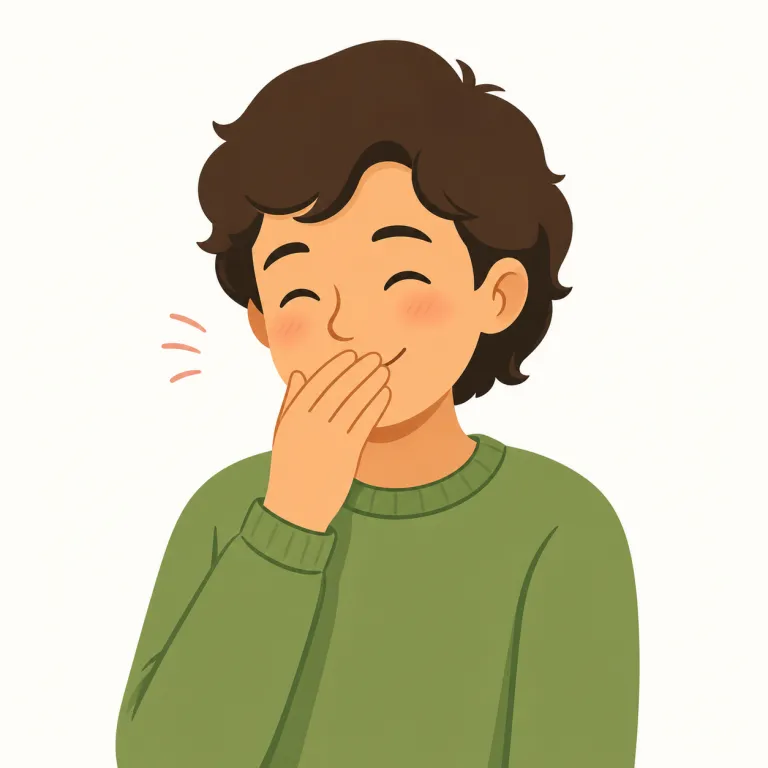
chuckle
chuckle は英検準1級・英検1級レベルの英単語で、「くすっと笑う、くすくす笑う、くすくす笑い、くすっと笑い」という意味があります。発音記号は /ˈtʃʌkəl/ です。
くすっと笑う、くすくす笑う
解説 Definition
動詞の chuckle は、声を大きく張らず、短く抑えてくすっと笑う動作を表します。冗談に反応する時だけでなく、思い出し笑い、照れ隠し、相手の言葉への穏やかな同意など、感情が小さく外へ出る場面に合います。
To chuckle means to laugh quietly in a soft, low way, usually because something is mildly funny. It is often used when the reaction is gentle, private, or amused rather than loud. As a noun, a chuckle is this kind of small laugh.
覚え方のコツ Memory Tip
chuckle は笑い方の動詞なので、誰がどんな理由で小さく笑ったかを描く時に使います。chuckle at は「何かを面白がってくすっと笑う」、chuckle to oneself は「一人で思い出して笑う」、chuckle softly は「静かに笑う」という感じです。名詞の chuckle が笑い声そのものなら、動詞はその声を漏らす行為に焦点があります。
Place it among other laugh words. A `chuckle` is quieter and lower than normal `laugh`, and less childish than `giggle`. It often appears in phrases like `chuckle at a joke` or `chuckle to oneself`.
例文
She chuckled when she heard the funny joke.
彼女はそのおかしい冗談を聞いてくすっと笑った。
He chuckled softly to himself while reading the humorous book.
彼はそのユーモラスな本を読みながら、小さく一人で笑った。
The audience chuckled at the speaker's dry humor.
聴衆は話し手の淡々としたユーモアにくすくす笑った。
くすくす笑い
(意味 2)解説 Definition
名詞の chuckle は、喉の奥で短く低く漏れる「くすっ」という笑い声そのものを指します。爆笑や甲高い笑いではなく、内心の満足・照れ・皮肉な面白さが小さな音になった感じで、場面に控えめな温かさを添えます。
A chuckle is a short, low, quiet laugh, often heard from deep in the throat. It is not a loud laugh or a high, bright one. It usually shows private amusement, gentle satisfaction, embarrassment, or mild irony. As a noun, chuckle refers to the small sound of laughter itself and can add a warm, restrained feeling to a scene.
覚え方のコツ Memory Tip
a chuckle と数えられるので、「一つの小さな笑い声」として覚えると自然です。with a chuckle なら発言に添えられた軽い笑い、a low chuckle なら低く抑えた笑い声、a satisfied chuckle なら満足がにじむ笑いです。動詞 chuckle が「くすっと笑う動作」を表すのに対し、名詞ではその瞬間に聞こえる音や反応のまとまりに意識を置きます。
Remember that a chuckle is countable: you can say a chuckle, as if it is one small laugh sound. With a chuckle often shows that someone speaks while giving a light laugh, and a low chuckle or a satisfied chuckle tells you the feeling behind it. The verb chuckle is the action of laughing quietly, but the noun focuses on the little sound or moment of laughter itself.
例文
A soft chuckle came from the back of the room.
部屋の後ろから、やわらかなくすくす笑いが聞こえた。
His joke was followed by a low chuckle from the audience.
彼の冗談のあと、聴衆から低いくすくす笑いがもれた。
With a satisfied chuckle, she closed the lid and said the recipe had worked.
満足そうなくすくす笑いをもらして、彼女はふたを閉め、レシピはうまくいったと言った。
くすっと笑い
(意味 3)解説 Definition
chuckle が名詞のときは、声を上げて笑うほどではない軽い笑いを指す。おかしさや親しみを感じたときに思わず漏れる短い笑いで、会話や冗談、思い出話への反応としてよく使われる。大笑いより控えめで、やわらかなニュアンスがある。
This adjective means not desirable, not positive, or likely to be judged badly. It is often used for reactions, reviews, reports, impressions, weather, or results. Compared with bad, it sounds a little more objective and more common in formal writing.
覚え方のコツ Memory Tip
`favor` は「好意・支持」、`favorable` は「好意的な、望ましい」です。そこに否定の `un-` が付くので、`unfavorable` は「好ましくない、よくない評価を受ける」と考えると自然です。`unfavorable reaction`、`unfavorable review`、`unfavorable impression`、`unfavorable weather` のように、反応・評判・印象・天候・結果が望ましくない場面で使います。
`Favor` means liking or support, and `favorable` means positive or desirable. Add `un-`, and `unfavorable` means not positive or not desirable. It often appears in phrases such as `unfavorable reaction`, `unfavorable review`, `unfavorable impression`, and `unfavorable weather`.
例文
His joke got a chuckle from the audience.
彼の冗談は観客からくすっと笑いを引き出した。
She answered with a quiet chuckle.
彼女は小さなくすっと笑いを返した。
A chuckle spread around the room when he showed the photo.
彼がその写真を見せると、部屋にくすっと笑いが広がった。
chuckle の語源・成り立ち Etymology
chuckle は英語の擬音的な chuck に、反復や継続を表す -le が付いた語で、中英語期のくだけた笑い声の響きから出た語です。喉の奥でくっくっと鳴る感じがそのまま「含み笑い」になったと考えると腑に落ちます。chuck や cackle も近い音感の仲間です。
Chuckle is probably an expressive English word built on a sound like chuck, with the ending -le, which often suggests repeated action. It seems to have grown from the sound of a quiet, throat-based laugh. That sound-based feeling stayed in the word as it came to mean a soft or contained laugh. It is related in style to words like cackle.
外部辞書で調べる
この単語を英単語クイズで覚えよう