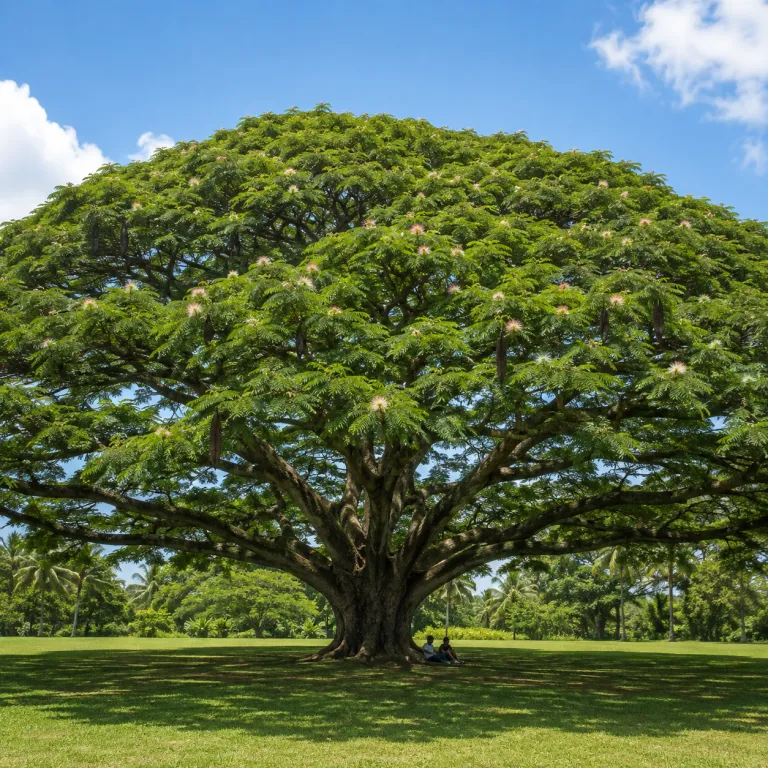
雨の木(熱帯樹木)
解説 Definition
熱帯地域原産の大きく広がる樹木。別名「レインツリー」や「モンキーポッド」と呼ばれる。象徴的な傘状の樹冠を持つ。
A saman is a large tropical tree, also called the rain tree. It is known for its wide branches that give a lot of shade, and it grows in warm regions. The word is mainly used in discussions of plants, forestry, or tropical environments.
覚え方のコツ Memory Tip
この語は無理に parts に分けるより、英語の別名 rain tree / monkeypod とセットで覚えるのが近道です。熱帯で傘のように横へ大きく広がる大木、強い日差しの下で広い木陰をつくる場面を思い浮かべると定着しやすくなります。雨のあと葉からしずくが落ちるので rain tree、と結びつけると意味が戻しやすいです。植物名は一般語のように派生で広げにくいので、saman は『南国の公園や道路脇にある、冠が大きく広がる木の固有名』として丸ごと保持すると忘れにくいです。shaman など似た音の語とは切り分けて、必ず「木の名前」に戻すのがコツです。
It is easier to remember `saman` with its common names `rain tree` or `monkeypod`. Think of a huge tropical tree with a wide, umbrella-like crown and deep shade. Also keep it separate from similar-sounding words like `shaman` by linking it firmly to `tree`.
例文
The saman tree is native to tropical regions of Central and South America.
サマンの木は中南米の熱帯地域原産である。
Saman trees are often planted in parks and along streets for shade.
サマンの木は日除けのため、公園や街路に植えられることが多い。
The wide canopy of a saman makes it an iconic tropical tree.
広い樹冠を持つサマンは、熱帯を象徴する木として知られている。
saman の語源・成り立ち Etymology
saman は英語がスペイン語 samán から借りた語で、そのさらに奥はカリブ語 zamang にさかのぼるとされる。接頭辞や語根に分ける語というより、土地固有の樹木名がそのまま英語へ渡った形で、熱帯樹らしい固有名の響きが残る。関連語は Samanea, zamang。
English saman was borrowed from Spanish samán, which is thought to come from Carib zamang. Like many plant names, it entered English as a local name rather than a word made from clear smaller parts. Its meaning stayed tied to the same tropical tree, and related forms include Samanea and zamang.
同じレベルの語彙をもっと
外部辞書で調べる
この英単語をクイズで覚えよう