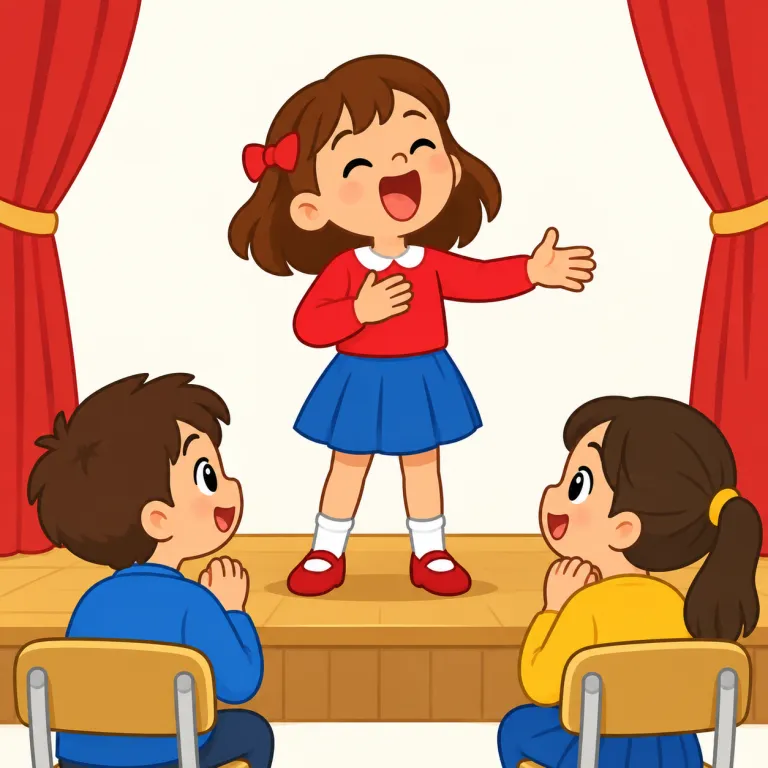
歌った
解説 Definition
sang は sing(歌う)の過去形です。過去に誰かが歌ったことを表すときに使い、過去分詞は sung になります。
Sang is the simple past form of sing. It describes producing a song or musical sounds with the voice at a particular time in the past.
覚え方のコツ Memory Tip
sang は sing「歌う」の不規則過去形で、過去分詞は sung。母音が sing /ɪ/ → sang /æ/ → sung /ʌ/ と変わる三段階で覚えます。yesterday や last night など過去を示す語と結び付け、sang a song、sang together の形で定着させましょう。
Remember sang as the past-tense member of the three-part pattern sing–sang–sung. The vowel changes from /ɪ/ in sing to /æ/ in sang and then to /ʌ/ in sung; it does not take the regular -ed ending. Use sang for a completed past action, especially with expressions such as yesterday or last night: “She sang a song.” Use sung, not sang, after has, have, or had. Common combinations include sang softly, sang together, and sang to the baby.
例文
She sang a song at school.
彼女は学校で歌を歌いました。
They sang together on the bus.
彼らはバスの中で一緒に歌いました。
My father sang softly to the baby.
父は赤ちゃんにやさしく歌って聞かせました。
sang の語源・成り立ち Etymology
古英語 singan(歌う)の過去形で、ゲルマン祖語 *singwaną に由来。印欧祖語の「声を出す」が原義。関連語: song(歌)、singer(歌手)。「声を響かせる」という原義から「歌う」行為全般を表すようになった。
Sang is the inherited past-tense form of sing, from Old English singan. The verb belongs to an old Germanic class of strong verbs that marked tense by changing the vowel rather than adding an ending. This historical pattern survives in modern English as sing–sang–sung. Song and singer belong to the same word family, although song developed as a noun rather than as an inflected form of sing.
同じレベルの語彙をもっと
外部辞書で調べる
この英単語をクイズで覚えよう