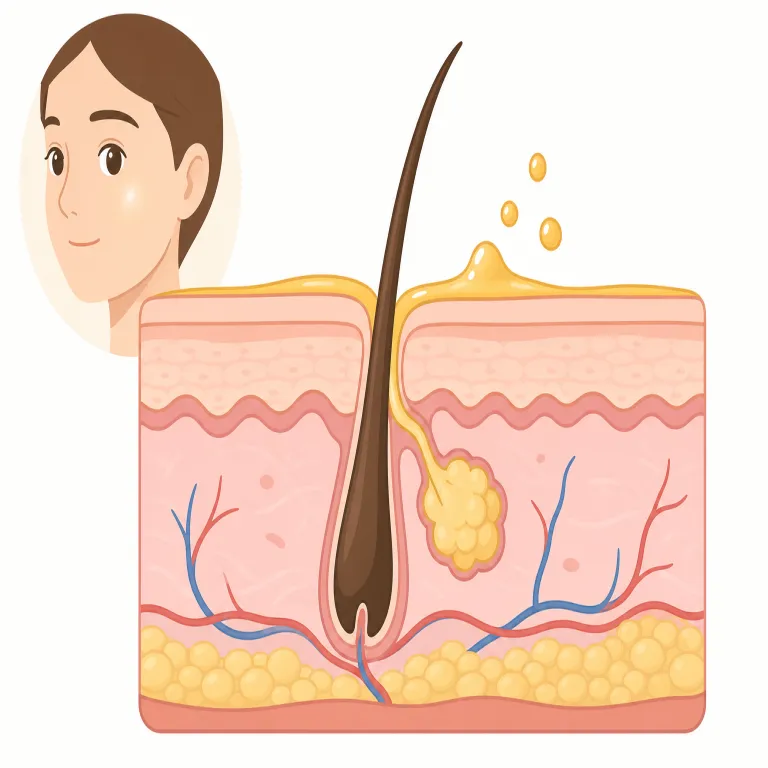
皮脂
解説 Definition
皮膚の皮脂腺から分泌される油性物質。皮膚と髪の潤滑と保護の役割を果たす。
Sebum is the natural oily substance produced by the skin. It helps protect and moisturize the skin and hair, but too much of it can be connected with oily skin or acne. The word is mostly used in medical, skincare, and biology contexts.
覚え方のコツ Memory Tip
skin care や dermatology の文脈で出る「皮膚の油」の専門名として覚えると定着しやすい語です。oil や grease より日常語ではなく、excess sebum, control sebum, sebaceous gland(皮脂腺)とセットで見るのが有効。sebaceous も同じ仲間だと押さえると、見た瞬間に『皮膚が分泌する脂』へ結びつきます。美容文脈で頻出なので、serum など別のスキンケア語と混同しないこともポイントです。
Treat this as a skincare and dermatology word. You will often see it in phrases like `excess sebum` or near `sebaceous gland`, so the `seb-` family is a strong memory hook. Be careful not to confuse it with beauty words like `serum`.
例文
Excess sebum production can lead to acne.
過剰な皮脂の分泌はニキビにつながる可能性がある。
Sebum helps protect the skin from drying out.
皮脂には皮膚の乾燥を防ぐ働きがある。
The dermatologist recommended a cleanser for oily skin with excess sebum.
皮膚科医は皮脂の多い肌向けのクレンザーを勧めた。
sebum の類義語・関連語
sebum の語源・成り立ち Etymology
sebum はラテン語 sebum「脂・獣脂」をそのまま英語に取り入れた語で、語源の時点から「油っぽいもの」を指す。sebaceous や seborrhea にも同じ語根が見え、皮膚から分泌される脂そのものを表す語だとわかる。
Sebum comes directly from Latin sebum, meaning fat, grease, or tallow. It entered English as a scientific term and kept that basic idea of oily animal fat. The meaning later narrowed to the oily substance produced by the skin. Related words include sebaceous and seborrhea.
同じレベルの語彙をもっと
外部辞書で調べる
この英単語をクイズで覚えよう