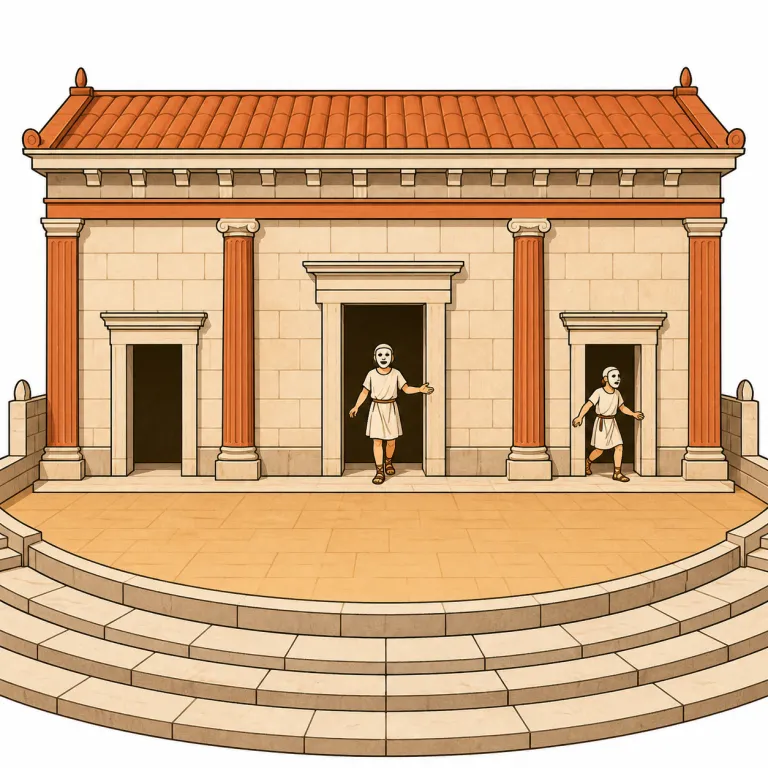
舞台背景壁
解説 Definition
古代ギリシア劇場の舞台建築で、俳優が登場する背景建造物です。演劇史における重要な用語です。
A skene is a structure at the back of the stage in ancient Greek theater. It served as a background for the action and sometimes as a place for actors to change or store props. The word is mainly used in theater history.
覚え方のコツ Memory Tip
skene は scene を連想すると覚えやすい語です。ふつうの scene は「場面」ですが、skene はその場面を支える“舞台奥の建物・背景壁”という、もっと具体的な演劇用語。古代劇場で、俳優が奥の建物から現れ、観客はその前で芝居を見る場面を思い浮かべると定着します。scenery のように背景全体をぼんやり指すのでなく、舞台背後にある構造物そのものだと押さえるのがコツです。
Connect it with `scene`, because both words belong to the theater world. But `skene` is more specific: it is the structure or background wall at the back of the stage, not just any scene. Think of actors appearing from a building behind the action.
例文
The skene in Greek theaters served as the backdrop for actors.
ギリシア劇場のスケーネは、俳優が演じる際の背景として使われていました。
Actors would exit and enter through the skene.
俳優たちはスケーネを通って舞台に出入りしました。
The skene was an essential architectural element of ancient drama.
スケーネは古代劇に欠かせない舞台建築でした。
skene の類義語・関連語
skene の語源・成り立ち Etymology
skene はギリシャ語 skene「幕屋・小屋」に由来し、古代劇場で役者の控えや背景となる建物を指す語になりました。最初は仮の小屋だったものが舞台奥の恒常的な構造物を意味するようになったため、「舞台背景壁」の意味が見えやすい語です。関連語は scene、proscenium です。
Skene comes from Greek skene, meaning "tent" or "hut." In ancient Greek theater, it first referred to a temporary structure behind the acting area, used like a hut or shelter. Over time, that structure became a regular part of the theater, so the word came to mean the stage building or backdrop. A related English word is scene.
同じレベルの語彙をもっと
外部辞書で調べる
この英単語をクイズで覚えよう