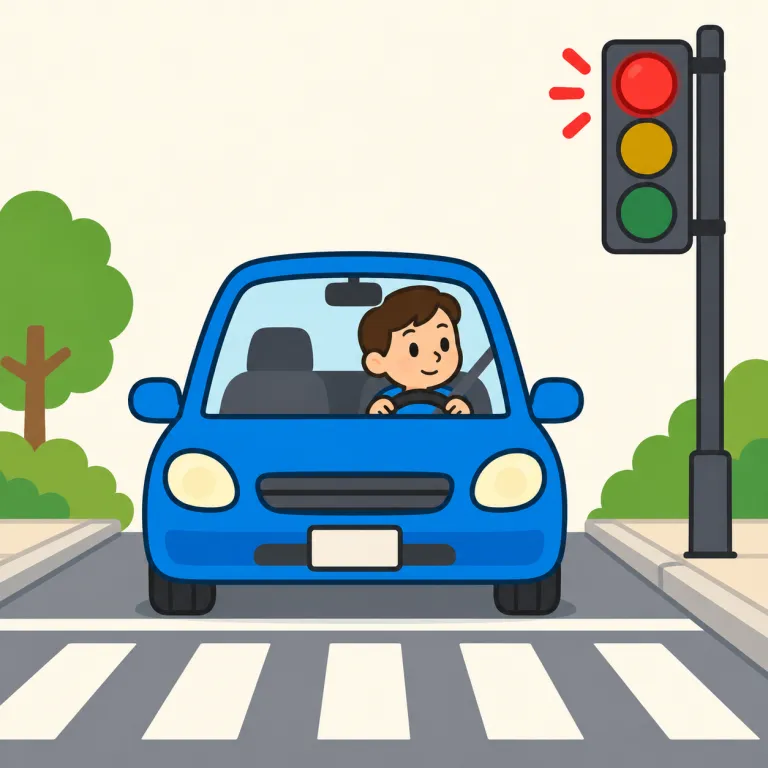
止まった
解説 Definition
stopped は stop(止まる、止める)の過去形・過去分詞です。動いていたものが止まったこと、機械が作動しなくなったこと、または活動や現象が続かなくなったことを表します。
Stopped is the simple past and past participle of stop. It indicates that something ceased moving, operating, or continuing, or that someone or something brought an action or process to an end.
覚え方のコツ Memory Tip
stopped は原形 stop の過去形・過去分詞で、短母音の後の一子音字 p を重ねて -ed を付けるため stop+p+ed となる。発音は /stɒpt/ または /stɑːpt/ で、-ed は /t/。動きなら the car stopped、機能なら the clock stopped working、継続の終了なら the rain stopped と場面別に覚える。
Stopped is the simple past and past participle of stop. Because stop ends in a single consonant after a stressed short vowel, double the final p before adding -ed: stop becomes stopped. The -ed ending is pronounced /t/. Remember it through common patterns such as “the car stopped,” “the clock stopped working,” and “the rain stopped.”
例文
The car stopped suddenly at the red light.
車は赤信号で突然止まった。
The clock stopped working after the battery ran out.
電池が切れた後、時計は止まった。
The rain stopped just in time for the outdoor event.
雨は屋外イベントにちょうど間に合う形で止まった。
stopped の類義語・関連語
stopped の語源・成り立ち Etymology
古英語 stoppian(塞ぐ、詰める)に由来し、俗ラテン語 stuppare(麻くずで詰める)から借用。stuppa(麻くず)はギリシャ語 styppē に遡る。関連語に stopper(栓)、stuff(詰め物→素材)がある。「穴を塞いで流れを止める」が原義。
Stopped is the past-tense and past-participle form of stop. The final p is doubled before -ed because stop ends in a single consonant following a stressed short vowel. Stop entered English through Old English stoppian and is related to forms derived from Vulgar Latin stuppare, “to plug with tow,” from stuppa, a fibrous material used for stuffing. The idea developed from blocking an opening or flow to causing any action, movement, or process to cease.
同じレベルの語彙をもっと
外部辞書で調べる
この英単語をクイズで覚えよう