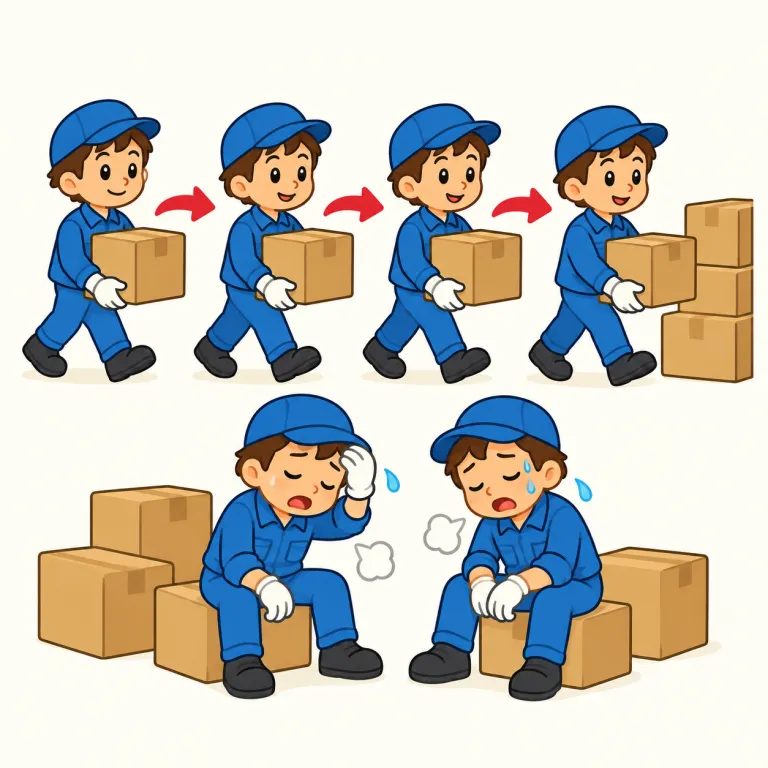
疲れる
解説 Definition
tiring は tire(疲れさせる)の現在分詞からできた形容詞で、疲れる、疲れさせるという意味です。仕事や活動、移動などが体力や気力を使うことを表します。
Causing physical or mental fatigue because an activity, task, or experience requires considerable effort, energy, or concentration. It describes the thing that produces tiredness, rather than the person who feels tired.
覚え方のコツ Memory Tip
tire「疲れさせる」に -ing を付けた形で、語末の e を落として tiring /ˈtaɪərɪŋ/ となります。人の状態を表す tired「疲れた」に対し、tiring は仕事・坂道・研修など「人を疲れさせる側」を説明します。a tiring day、physically tiring の形で覚えましょう。
Start with the verb tire, “make someone feel exhausted.” To add -ing, drop the silent final e: tire becomes tiring, pronounced /ˈtaɪərɪŋ/. The key contrast is between tiring and tired. A long climb is tiring because it causes fatigue; after the climb, you are tired because you experience that fatigue. Imagine a demanding day at work, a steep uphill walk, or an intensive training session. Common combinations such as a tiring day, a tiring journey, emotionally tiring, and physically tiring reinforce the idea of something using up a person’s energy.
例文
It was a tiring day at work.
仕事で疲れる一日でした。
Walking up the long hill was tiring.
長い坂を歩いて上るのは疲れました。
The training was useful but very tiring.
その研修は役に立ちましたが、とても疲れるものでした。
tiring の類義語・関連語
紛らわしい語
tiring の語源・成り立ち Etymology
古英語 teorian(疲れさせる)に由来。ゲルマン祖語の語根で「消耗する」を意味した。tire(疲れさせる)の現在分詞形で、「疲れさせるような」という形容詞用法。同根語に tired(疲れた)、tiresome(退屈な)がある。体力が尽きる感覚を表す古い語根に遡る。
Tiring is the present-participle form of tire, used adjectivally to mean “causing fatigue.” Tire in this sense is traced to Old English tēorian, meaning to fail, become weary, or be exhausted, and belongs to an old Germanic history associated with wearing out. In forming tiring, English drops the silent e of tire before adding -ing. Related forms include tired, which describes the affected person, and tiresome, which often suggests weariness or annoyance.
同じレベルの語彙をもっと
外部辞書で調べる
この英単語をクイズで覚えよう