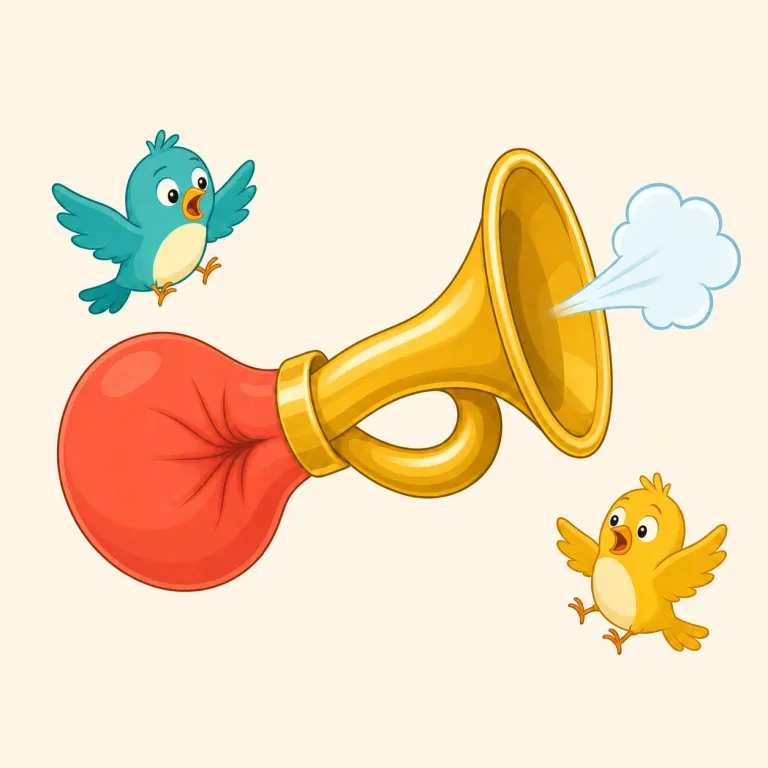
おなら
noun 名詞くだけた、特に子ども向けの表現で、一回のおなら、またはその音を指す可算名詞である。let out a toot などの形で使われ、車や笛が出す短い警笛音とは文脈によって区別される。
笛や車のクラクションなどが出す「プッ」という短い音。軽い合図の音について、くだけた場面でよく使われる。
This is a short, light sound made by a horn or whistle. It is often used as a casual signal rather than a long, loud warning.
toot は、車のクラクションや笛が一度だけ出す軽い「プッ」という音を、その響きごと覚える擬声語です。長く大きな警笛を表す blast や、一般的なクラクション音の honk より、短く軽い合図という感じが中心です。a toot from the horn「警笛のプッという音」、give a short toot「短く一度鳴らす」が使いやすい形。出発前の列車が短く鳴らし、周囲の人が顔を上げる場面を固定すると、この名詞の意味が定着しやすくなります。
Toot imitates the brief sound of a horn or whistle, so imagine a car giving one quick “toot.” Phrases such as “a toot from the horn” and “give a short toot” emphasize that the sound is brief and light.
We heard a toot from the car outside.
外の車からプッという音が聞こえました。
The train gave a short toot before it left the station.
列車は駅を出る前に短くプッと音を鳴らしました。
A little toot from the horn made everyone look up.
クラクションの小さなプッという音で、みんなが顔を上げました。
文脈によって、次の意味でも使われます。
くだけた、特に子ども向けの表現で、一回のおなら、またはその音を指す可算名詞である。let out a toot などの形で使われ、車や笛が出す短い警笛音とは文脈によって区別される。
「toot」はラテン語などではなく、ラッパの「プッ」という音を直接模した擬声語が起源です。中世オランダ語tuteや古ノルド語þútaと同源で、音そのものが語根となります。同系統の「tut」や「tootle」もあり、音の響きで意味を直感的に理解できる単語です。
Toot began as an imitation of the sound of a horn. It has been compared with Middle Dutch tute, a word associated with making such a sound.
この英単語をクイズで覚えよう