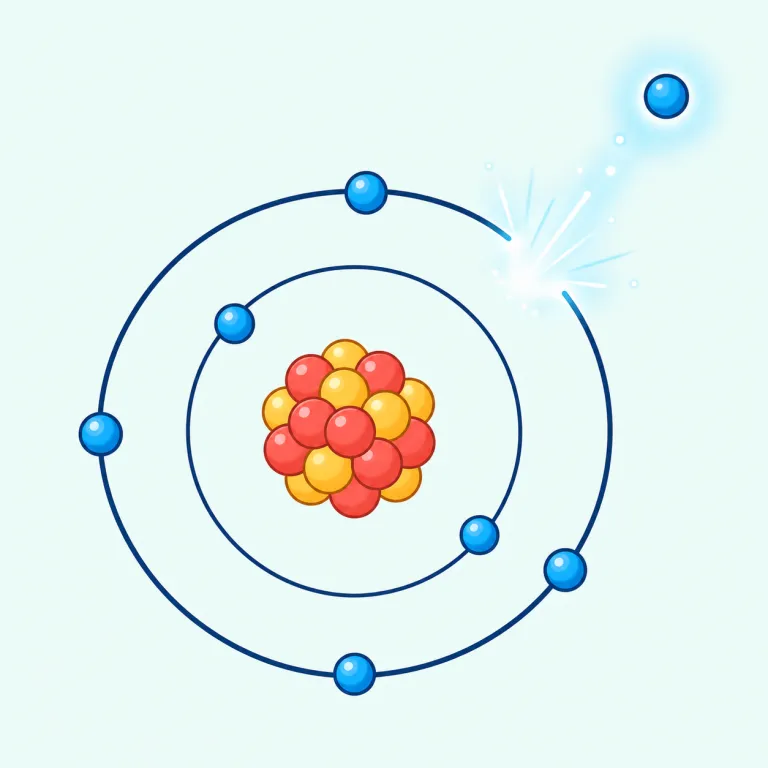
イオン化
解説 Definition
原子や分子が電子を失ったり得たりしてイオンになる現象。こうした電子の移動で電荷を帯びるため、気体や溶液中に正負のイオンが現れる。化学・物理のさまざまな場面で、反応のきっかけや電流の流れを左右する大事な過程である。
Ionization is the process in which an atom or molecule gains or loses electrons and becomes an ion. This term is mainly used in chemistry and physics. It often happens because of heat, radiation, or a chemical reaction.
覚え方のコツ Memory Tip
ionization は、まず見慣れた ion を見つけて「イオンになること」と取るのが近道です。さらに -ize は「〜化する」、-ation は「その過程・作用」なので、語全体で『イオン化という変化のプロセス』とまとまります。chemistry や physics では ionization energy, ionized gas の形でよく出るので、neutral(中性)との対比で覚えると定着しやすいです。dissociation と近く見えても、こちらは特に電荷を帯びてイオンになる点が中心です。
Start with the familiar word ion in the middle. Then notice -ize, meaning 'make into', and -ation, meaning 'the process'. So ionization is easy to remember as the process of becoming an ion, often contrasted with something neutral.
例文
The mass spectrometer requires ionization of the sample before it can separate the ions.
質量分析計でイオンを分離するには、事前に試料をイオン化する必要がある。
High voltage caused ionization of the air around the electrode, creating a faint blue glow.
高電圧で電極の周囲の空気がイオン化し、うっすらと青い光を放った。
Chemists compare ionization energies to understand how easily different atoms lose electrons.
化学者たちは異なる原子がどれだけ電子を失いやすいかを知るためにイオン化エネルギーを比較する。
ionization の類義語・関連語
対義語
紛らわしい語
ionization の語源・成り立ち Etymology
ionization は ion「イオン」+ -ize「〜化する」+ -ation「作用・過程」からできた語です。ion はギリシャ語 ienai「行く」に由来し、「移動するもの」という原義を持つため、粒子が電荷を帯びて動ける状態になることを指すと考えると意味がつかみやすいです。関連語は anion、cation です。
Ionization is formed from ion, -ize, and -ation. Ion comes from Greek ienai, meaning "to go," because early scientists used it for particles that move. From that idea, ionization came to mean the process of making something into an ion, or turning it into a charged particle. Related words include anion and cation.
同じレベルの語彙をもっと
外部辞書で調べる
この英単語をクイズで覚えよう