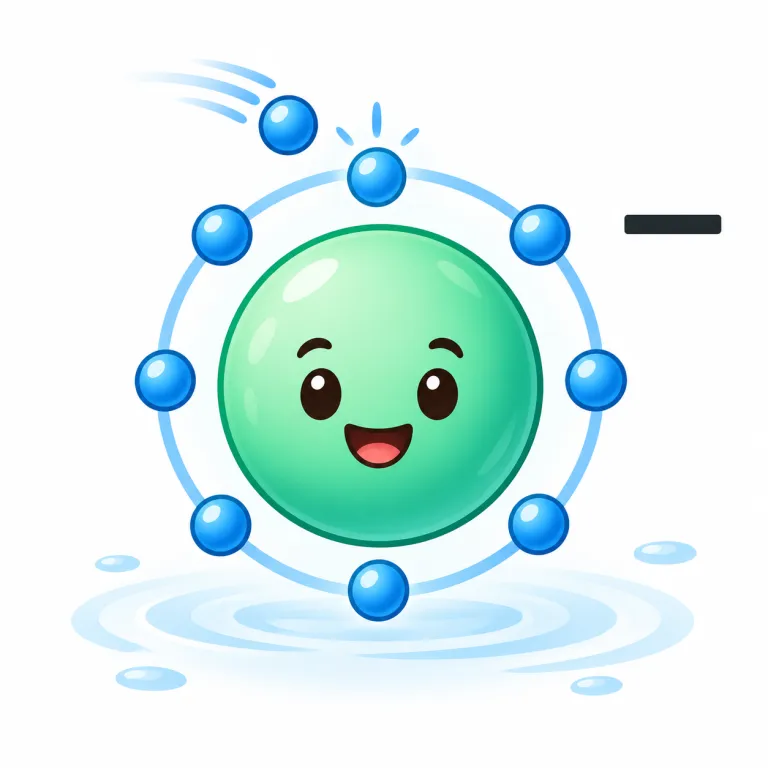
陰イオン
解説 Definition
陰イオンとは、電子を受け取って負の電荷を帯びた原子や原子団のこと。化学反応や電気分解では陽イオンと対になる存在で、水溶液中を移動したり化合物をつくったりする。塩化物イオンや硫酸イオンなどが代表例である。
An anion is an ion with a negative electrical charge. It forms when an atom or group of atoms gains one or more electrons. This word is mainly used in chemistry and physics, and it is the opposite of cation.
覚え方のコツ Memory Tip
まず ion「イオン」が土台で、anion は『イオンのうち負に帯電した側』と二択で覚えると定着しやすい。単独で丸暗記するより cation とセットにし、化学ではイオンが positive / negative の二陣営に分かれる、と図で思い浮かべると強い。chloride anion, sulfate anion, anion exchange のように名詞の前後でよく現れるので、『陰イオンそのもの』より『負電荷をもつイオンの分類名』と捉えると読み取りやすい。atom と違って charge を帯びている点も混同しない。
Build it around the word `ion`. Then remember chemistry often gives you a pair: `anion` and `cation`. If you always study them together as the two opposite kinds of ions, `anion` is easier to keep in place.
例文
In salt water, the chloride ion acts as an anion during electrolysis.
食塩水では、塩化物イオンが電気分解の間、陰イオンとして働く。
The anion and cation move in opposite directions when electrical current is applied.
電流が加わると、陰イオンと陽イオンは反対方向に移動する。
Sulfate is a common anion found in many compounds.
硫酸イオンは、多くの化合物に見られる代表的な陰イオンである。
anion の類義語・関連語
anion の語源・成り立ち Etymology
anion はギリシャ語 ana-「上へ」+ ion「行くもの」に由来し、原義は「上がっていく粒子」。電気分解で陽極へ向かうものを動きで名づけた語で、ion や cation と並べると発想が見えやすい。
From Greek elements meaning roughly "the thing that goes," built around ion from "going." In early scientific use, it referred to a particle named by the direction it moved during electrolysis, especially toward one electrode. It is closely related to ion and cation.
同じレベルの語彙をもっと
外部辞書で調べる
この英単語をクイズで覚えよう