イオニア式の
adjective 形容詞古代ギリシャ建築のイオニア式に関することを表し、特に渦巻き形の柱頭をもつ柱やオーダーについて使います。通常は Ionic と大文字で書き、化学の「イオン性」とは語源も意味も異なります。
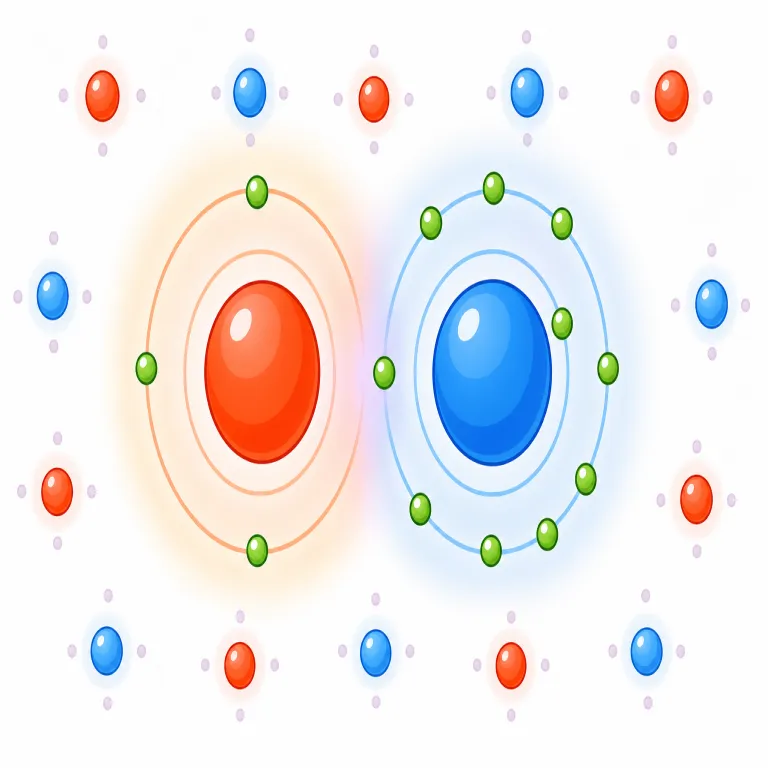
化学や物理学でイオンに関連する、またはイオンから成る物質を示す形容詞。正負の電荷を持つ原子や分子が電子のやり取りによって結びつく性質に使われる。イオン性の物質は水などの極性溶媒に溶けやすく、導電性を示すことが多い。
Ionic means related to ions, which are atoms or molecules with an electric charge. The word is common in chemistry when talking about bonding, substances, or reactions involving charged particles.
ion を知っていれば ionic はほぼ「イオンに関する」の形容詞だと取れる。-ic は scientific, metallic などと同じく「〜性の/〜に関する」を作る語尾。化学では ionic bond, ionic compound が最重要コロケーションで、covalent と対比して覚えると定着しやすい。電子を共有するより、電荷を帯びた粒子同士が引き合ってできるタイプ、と場面で結びつける。NaCl のような塩のイメージにつなげると残りやすい。綴りが似る iconic とは別語。
If you know ion, ionic is the adjective form: "related to ions." The ending -ic works like in scientific or metallic. Remember it with the common pairs ionic bond and ionic compound, especially as the opposite of covalent. Do not confuse it with iconic, which is a completely different word.
Many ionic compounds dissolve easily in water.
多くのイオン化合物は水に溶けやすい。
Because of their ionic nature, salts conduct electricity when dissolved in water.
塩はイオン性であるため、水に溶けると電気を通す。
The chemist studied ionic bonding in the laboratory.
化学者は実験室でイオン結合を研究した。
文脈によって、次の意味でも使われます。
古代ギリシャ建築のイオニア式に関することを表し、特に渦巻き形の柱頭をもつ柱やオーダーについて使います。通常は Ionic と大文字で書き、化学の「イオン性」とは語源も意味も異なります。
ionic は ion + -ic から成り、ion はギリシャ語 ienai「行く」に由来します。anion や cation もこの ion を共有し、「電極へ動いていく粒子」が元のイメージ。だから ionic は、電荷を帯びた粒子として振る舞う、つまりイオン性のという意味になります。
Ionic is formed from ion + -ic. Ion comes from Greek ienai, meaning "to go," because early scientists used it for particles that move toward an electrode; the same root appears in anion and cation. From that idea of moving charged particles, ionic came to mean "relating to ions" or "having the nature of ions."
この英単語をクイズで覚えよう