イオン化する
解説 Definition
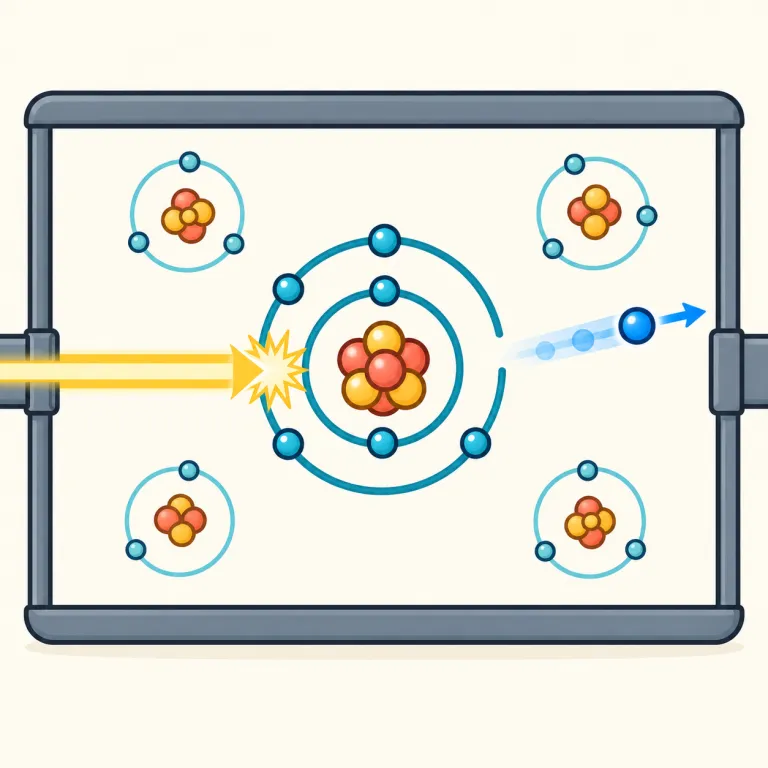
原子または分子に電子を失わせたり得させたりして、電荷を持つイオンに変えること。
Ionising means causing atoms or molecules to gain or lose electrical charge and become ions. This word is mainly used in science, especially in chemistry, physics, and discussions of radiation. It often describes radiation or processes that have enough energy to change the structure of matter in this way.
覚え方のコツ Memory Tip
核は ion。まず ion=電気を帯びた粒子 を押さえると、-ise / -ize は「〜化する」、-ing は「その過程・性質」を表します。つまり ionising は「原子や分子をイオンに変える/イオン化を起こす」と考えるとよい語です。電子を失ったり受け取ったりして中性の粒子が ion になる場面を思い浮かべると定着しやすいです。ionising radiation のように「イオン化を起こす性質の」と名詞を修飾する形でもよく出ます。
Start with the core word `ion`, a charged particle. Then add `-ise/-ize` for "make into" and `-ing` for the active process, so `ionising` is the thing that causes ions to form. It often appears in `ionising radiation`, so link it with X-rays or high-energy particles. Remember the contrast: `ionised` is the result, `ionising` is the cause.
例文
The radiation is ionising atoms in the gas.
その放射線は気体中の原子をイオン化している。
The beam is ionising molecules inside the chamber.
そのビームは容器内の分子をイオン化している。
These particles are ionising the surrounding air as they pass through it.
これらの粒子は通過する際に周囲の空気をイオン化している。
ionising の類義語・関連語
ionising の語源・成り立ち Etymology
ionising は ionise「イオン化する」の -ing 形で、ion はギリシャ語 ienai「行く」に由来します。電極へ『移動していく粒子』という発想から ion と名づけられ、-ise が付いて「イオンの状態にする」という意味になりました。関連語は ion、anion です。
Ionising comes from ionise, based on ion, a scientific term taken from Greek ienai, "to go." The name was chosen for particles that move toward an electrode. With the verb ending -ise, the word came to mean causing something to become ions; related words include ion and anion.
同じレベルの語彙をもっと
外部辞書で調べる
この英単語をクイズで覚えよう