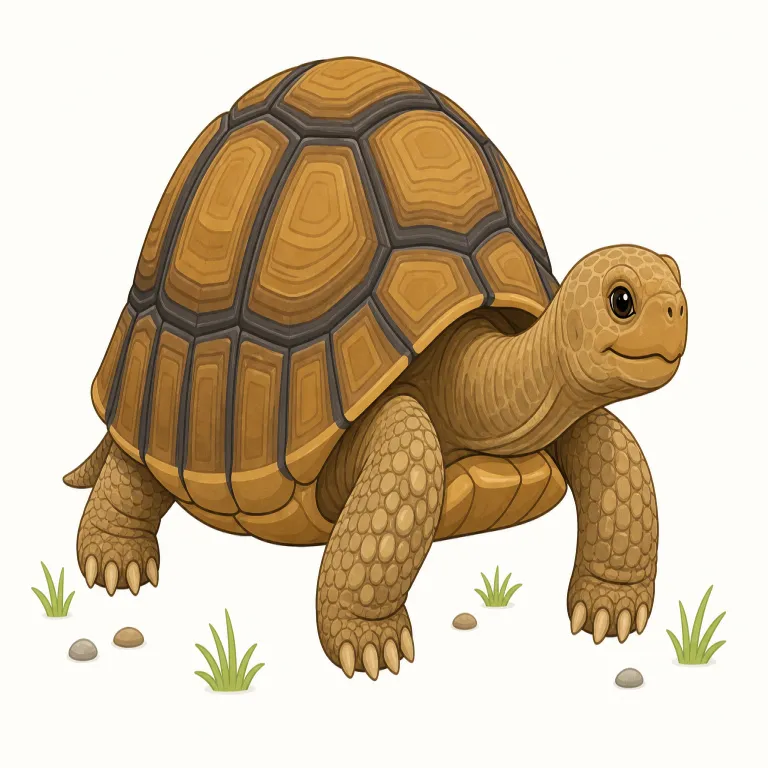
リクガメ
解説 Definition
主に陸上で生活するカメの仲間を指す名詞。水辺で暮らすことの多い turtle と区別して使われ、丸みのある重い甲羅と丈夫な脚をもつものが多い。ペットや野生動物の文脈で、陸生種を特定するときに用いられる。
A tortoise is a land animal with a hard shell, four legs, and slow movement. Unlike many turtles, tortoises usually live on land rather than in water. The word is used in biology and everyday descriptions of animals.
覚え方のコツ Memory Tip
turtle がカメ全般を広く指し、水辺で暮らす種類まで含めやすいのに対し、tortoise は「主に陸で生きる、ずっしりしたカメ」と狭く覚えると定着しやすいです。英語では the tortoise and the hare(ウサギとカメ)が非常に有名なので、「遅いけれど地面を着実に進む動物」という像と結びつけるのが有効です。giant tortoise や pet tortoise のように、重い甲羅・太い脚・陸生という見た目を思い浮かべ、水を泳ぐ turtle と切り分けると混同しにくくなります。
Keep it separate from `turtle`. A `tortoise` is the land one, with a heavy shell and thick legs, while `turtle` is the broader word and often suggests water. A strong memory hook is the famous story `The Tortoise and the Hare`, which gives it the image of a slow land animal.
例文
The tortoise moved slowly across the dry ground.
リクガメは乾いた地面をゆっくり横切った。
A giant tortoise can live for more than a hundred years.
オオリクガメは百年以上生きることがある。
The children learned how a tortoise differs from a turtle.
子どもたちはリクガメと水辺で暮らすカメの違いを学んだ。
tortoise の類義語・関連語
類義語
紛らわしい語
tortoise の語源・成り立ち Etymology
「tortoise」は中英語を経て中世ラテン語 tortuca に由来し、その背後には後期ラテン語 tartarucha があるとされます。スペイン語 tortuga やフランス語 tortue も同じ流れにあり、古くから各地で受け継がれた「亀」の呼び名だと知ると印象に残ります。
Tortoise came into English through Middle English from Medieval Latin tortuca, probably from an earlier Late Latin form. It is part of the same word family as Spanish tortuga and French tortue. The word has been passed through several languages as an old name for this animal, with its form changing over time but the basic reference staying the same.
同じレベルの語彙をもっと
外部辞書で調べる
この英単語をクイズで覚えよう